McKee Says
I open up Robert McKee’s Story to a random page and write about what he says.
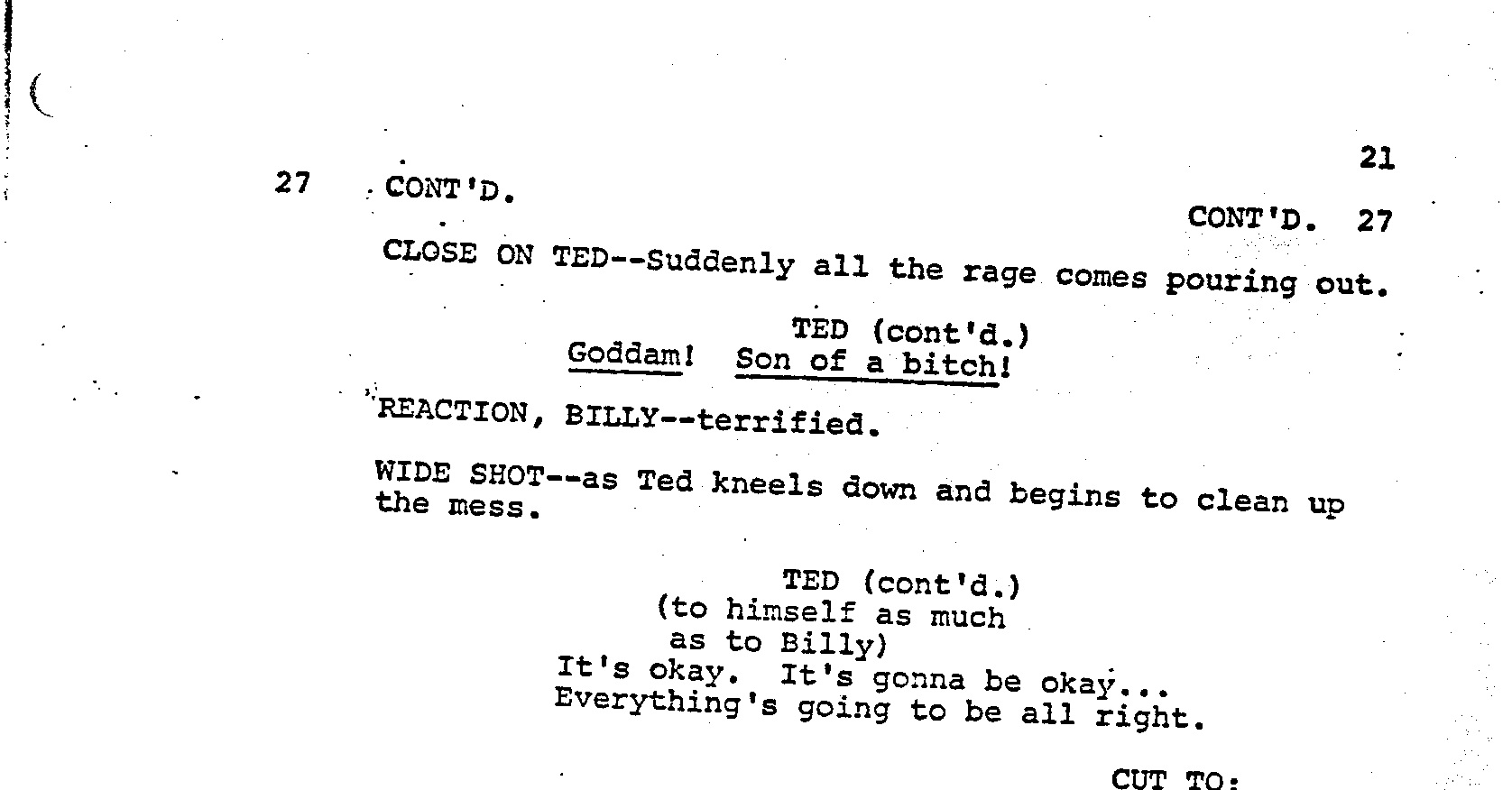
To achieve complexity the writer brings characters into conflict on all three levels of life, often simultaneously. For example. The deceptively simple but complex writing of one of the most memorable events in any film for the last two decades: the French Toast scene from Kramer vs. Kramer . This famous scene turns on a complex of three values: self-confidence, a child’s trust and esteem for his father, and domestic survival. As the scene begins all three are at the positive charge.
The three levels of conflict that Mckee is referring to are inner, personal, and extra-personal . And he is absolutely right, the scene has all three. On the extra personal level Kramer finds himself in conflict with the kitchen which is foreign to him. The personal is the son, who he has to lie to, promise to, and feed. The inner is the insecurity about his own ability to get through this moment and the rest of their lives. It all bubbles to the surface and the simple act of making French Toast is transformed into a moment filled with meaning and tension that rises and explodes.
Developing moments like this is what every writer dreams off and it’s not easy. It cannot be forced. It requires an understanding of why the scene is being written in the first place and then the complex layers of character and symbolism can come into play.
It is also an example of brilliant acting and an actor who knows he is the instrument through which subtext is delivered. Hoffman adds two little words (Goddamn her!) at the end of the scene. These words change the nature of that moment and get right down to what the scene is about. They express the reason we are in that kitchen in the first place: Kramer needs to realize that he cannot take his wife’s departure for granted, there is simply too much at stake.

 Sometimes a Good Notion