Sometimes a Good Notion

Here Come The Tributes

The following is a speech given by Streep at a tribute for Vanessa Redgrave.

It’s one of those moments that are typical of this season when fabulously talented people gush about fabulously talented people and it’s ridiculous and lovely. Streep doesn’t seem to have an arrogant bone in her body and what’s wonderful about this speech is that she doesn’t seem to understand that the way she feels about Redgrave is the way that people feel about her.

Redgrave is bound to be on people’s lips this season, early reviews of Coriolanus are in and she is supposedly tremendous in it. Volumnia is a great role. As for me, I don’t make claims to know a lot about Redgrave. I’ve of course seen Julia but remember her more for smaller roles in movies like Deep Impact and Murder on the Orient Express. However, Redgrave is the only actor that I have ever had in mind when writing a character. She made an impact on me but pointing out the moment she came into my mind and stayed there is currently difficult if not impossible.

TILDA

The National Board of Review threw the horse race into motion with its winners this week. Tilda made the cut — it’s an interesting alternative to Meryl Streep,Viola Davis, Michelle Williams, & Glenn Close who probably have the strongest campaigns. All I have to say is that — Tilda is amazing.

I’m Also very happy about Christopher Plummer’s best supporting actor. The man has been making pictures since 1953 and never won an Oscar, Golden Globe, or SAG award. This needs to be a sweep all the way to the end. (An Alan Rickman recognition in this category would also be equally satisfying.)

Rooney Mara making waves and Pariah, which I have yet to see but which stars the fab Adepero Oduye who I knew back in NY, also got a mention.

Last but not least, Harry Potter getting 2 mentions is great, it keeps the most successful movie franchise in the race for gold. Over 6 billion dollars in 8 films, easily topping Star Wars and James Bond with the added bonus that it got the world to read.

Best Actor
George Clooney, The Descendants

Best Actress
Tilda Swinton, We Need to Talk About Kevin

Best Adapted Screenplay
Alexander Payne and Nat Faxon & Jim Rash, The Descendants

Best Animated Feature
Rango

Best Director
Martin Scorsese, Hugo

Best Documentary
Paradise Lost 3: Purgatory

Best Ensemble
The Help

Best Film
Hugo

Best Foreign Language Film
A Separation

Best Original Screenplay
Will Reiser, 50/50

Best Supporting Actor
Christopher Plummer, Beginners

Best Supporting Actress
Shailene Woodley, The Descendants

Breakthrough Performance
Felicity Jones, Like Crazy

Breakthrough Performance
Rooney Mara, The Girl with the Dragon Tattoo

Debut Director
J.C. Chandor, Margin Call

NBR Freedom of Expression
Crime After Crime

NBR Freedom of Expression
Pariah

Special Achievement in Filmmaking
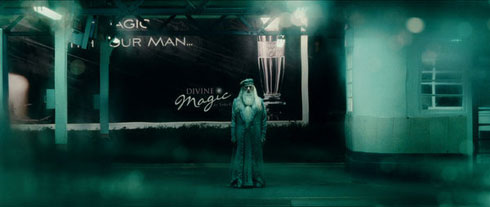
The Harry Potter Franchise – A Distinguished Translation from Book to Film
Spotlight Award
Michael Fassbender (A Dangerous Method, Jane Eyre, Shame, X-Men: First Class)

Top 10 Independent Films
(in alphabetical order) 50/50, Another Earth, Beginners, A Better Life, Cedar Rapids, Margin Call, Shame, Take Shelter, We Need To Talk About Kevin, Win Win

Top 5 Documentaries
(in alphabetical order) Born to be Wild, Buck, George Harrison: Living in the Material World, Project Nim, Senna

Top 5 Foreign Language Films
(in alphabetical order) 13 Assassins, Elite Squad: The Enemy Within, Footnote, Le Havre, Point Blank

Top Films
(in alphabetical order) The Artist, The Descendants, Drive, The Girl with the Dragon Tattoo, Harry Potter and the Deathly Hallows Part 2, The Ides of March, J. Edgar, The Tree of Life, War Horse


Marry The Night

            GAGA
When I look back on my life, it’s
not that I don’t want to see things
exactly as they happened, it’s just
that I prefer to remember them in
an artistic way. And - truthfully -
the lie of it all is much more
honest because I invented it.
Clinical psychology tells us,
arguably, that trauma is the
ultimate killer. Memories are not
recycled like atoms and particles
in quantum psychics - they can be
lost forever. It’s sort of like my
past is an unfinished painting, and
as the artist of that painting I
must fill in all the ugly holes and
make it beautiful again. It’s not
that I’ve been dishonest, it’s just
that I loathe reality. For
example, those nurses - they’re
wearing next season Calvin Klein,
and so am I. And the shoes - custom
Giuseppe Zanotti. I tipped their
gauze caps to the side like
Parisian berets - because I think
it’s romantic, and I also believe
that mint will be very big in
fashion next Spring. Check out this
nurse on the right, she’s got a
great ass. Bam.
The truth is, back then at the
clinic, they only wore those funny
hats to keep the blood out of their
hair. And that girl on the left -
she ordered gummy bears and a knife
a couple of hours ago. They only
gave her the gummy bears.
I wish they’d only given me the
gummy bears.

           NURSE
Good morning morphine
princess. How are you feeling?
Everything went really well. Look
at you, I remember when I delivered
you, you looked just like your
mother.
            GAGA
Except my mother is a saint.

            NURSE
Tachycardia. Heart rate is 120.
            GAGA
I’m gonna make it.
            NURSE
No intimacy for two weeks. Blood
pressure 90 over 40. A little low;
but then again you’ve always been
on the low side.
            GAGA
I’m going to be a star. You know
why? Because - I have nothing left
to lose.

            NURSE
Do you need anything else?
            GAGA
Just un petite peu de la musique.
Later.
            GAGA
You may say I lost everything, but
I still had my Be-Dazzler and I had
a lot of patches, shiny ones from
M&J Trimming, so I wreaked havoc on
some old denim. And I did what any
girl would do -- I did it all over
again

D&D : Disney & Dali

Walt Disney (and animation in general) tends to get passed over in most History of Film classes. When I was assigned to teach the subject I made a Norquist style pledge not to do this in my class. My discussion of Disney started small, a mere showing of Steamboat Willie during a lecture of sound seemed appropriate. But as I learn more about the artist his prominence in my class has grown and he’s now comfortably discussed as a part of a series of lectures that cover German Expressionism, Neo-Realism, Sound, and  Surrealism.

Disney was a versatile artist who borrowed and played in a way that few artists did at the time.

What I admire most about him was that he found ways to incorporate strange and wonderful influences into his work and still managed to tell stories that had wide appeal.  From the image and brand that he built around his name it would not seem that he had an extravagant bone in his body, but when I play sequences like Snow White’s run through the forrest, the Queen’s transformation in the same movie, or Dumbo’s pink elephant dream I can’t help but to be amazed at how he used the work of filmmakers like Murnau, Lang, Lewis, Brunuel, and Dali to structure his sequences.


His early films have darkness and violence hidden beneath the glossy surface.  Snow White’s Run through the forrest is closer to an early horror film than a children’s fantasy.  By using techniques not associated with children’s entertainment, Disney was able to create dynamic contrast that made the stories interesting and sometimes frightening.

Throughout the first twenty years of his career, when he arguably did his best work (Fantasia, Snow White, Pinochio, Dumbo), he would sprinkle his films with mainly european concepts of storytelling such as dream logic,  theatricality, high contrast, and stylization to symbolize a character’s emotional state. Disney’s acceptance of modern artistic concepts would put him on a collision course with Salvador Dali who he would meet and form an unlikely partnership with in the 1940’s.

One could not think of two artists so diametrically different from each other. Disney with his squeaky clean American image, and Dali with his confrontational eccentricity. Yet these men also shared the common goal of creating beauty in a world that kept tearing itself apart. The two unlikely partners decided to collaborate on a short animated musical piece which told the story of Chronos, the god of time, and his tragic love for a mortal dancer. The piece would be called Destino.

The collaboration would span a few years but would ultimately fall appart due to contractual and financial differences. However, the break up left in its wake over 200 original sketches, 13 paintings, and storyboards all by Dali which would remain in the Disney vaults for over 40 years.  A holy grail if there ever was one.

I would not be until 1999 that Roy Disney would begin to finish the film. With the help of the Disney Studios in Paris and Director Dominique Monfrey, Roy Disney set to the task of completing this short piece of animation history.

The story of these two men would continue to fascinate writers and bloggers for years and details about this partnership have continued to trickle out. Letters between these two artists have been released to the public revealing a far deeper friendship than previously thought and deepening the mystery of this collaboration. For me, the most interesting tid bit of information is one particular detail of their contractual obligation to each other.  Disney and Dali agreed that Disney could hold the paintings but would not own them until the film was completed.  It is as if they knew that their styles and the practicalities of filmmaking would eventually stop them short of completion, but they made it impossible  for future generations of money men at Disney to leave the work unfinished.

On Tough Criticism

This has been on my mind for a few days and I’ve been unsure on how to approach the subject, but I decided what the hell… A large part of what I do is to provide students with the opportunity to have their work critiqued not only by me but also by their peers. For the most part students take a non-combative approach to criticism leaving the often-difficult work of dismantling a piece to me, which is understandable. On a few occasions I have had students that have reacted defensively to what have been tough critiques of their work and this got me reading up on the art of critiquing.  During that process I found two perspectives that I tend to agree with.

The first is from an essay written by Jeffrey Di Leo in The Chronicle of Higher Education entitled In Praise of Tough Criticism.  Di Leo writes the following:

But when it comes to criticism, is compassion really preferable to combativeness? Does an upbeat style actually encourage positive tendencies in the profession? Is compassion an intellectual virtue? The answer to those questions is no. If a compassionate, caring form of criticism entails removing the “critical” from “critical exchange,” then I would rather see the field move toward a more combative, confrontational style—even if it means ruffling a few feathers.

I agree with the assessment.  On most occasions I only get one semester to make an impact in my student’s work. It might seem like an eternity to the student but it really isn’t that much time.  It is my job to move the student past conformity. I do not approach that, I don’t think, by trying to convince the student that I’m right but rather by trying to convince them that there are approaches to their story other than their own. I hope I help them understand that as writers and filmmakers they are required to think more and settle less.  Sometimes this is an impossible task and it can get rough which is when the second perspective I found on the subject comes into play.

It comes from a blog called Your Screenplay Sucks (one of my favorite reads on the internet). Screenwriter and critic Bill Akers argues that as writers we need to learn to Accept the Body Blow.  He argues

Know it’s normal, however, to WANT to stand up and shout that they don’t understand the genius you have laid upon the world… just don’t do it. Resist the temptation to raise your hackles. Breathe deep and imagine they are NOT swinging a great Conan-size bloody battle-axe at your head… take notes and become a better writer.

The purpose of critique is to create positive tendencies. My goal is for the student to leave the classroom after one term and be able to identify their mistakes on their own. It is not, as some students believe, to demonstrate how much greater a writer I am.  In fact I tend to end each term by giving my students a copy of whatever it is I am writing at the moment so that they can critique me. This is for the most part a lopsided event because I still havent given them their final grade, but it allows them to see that no one gets it perfect right-off-the-bat and that as artists they have to be willing to accept that.

Catch of the Day: Fresh Air Francis Ford Coppola

I was fortunate enough to catch this bit last night on my drive home from the Airport.   Coppola had his latest film premiere @ Toronto and did a question and answer session. It’s mostly memories and tales from old productions but it makes for good listening.

http://www.npr.org/v2/?i=140870590&m=142506207&t=audio

They also make reference to a moment at the end of Apocalypse Now and the development of one of the finest film monologues ever written.

                                        KURTZ
                         I've seem horrors.  Horrors that
                         you've seen.  But you have no right
                         to call me a murderer.  You have a
                         right to kill me.  You have a right
                         to do that.  But you have no right
                         to judge me.

                         It's impossible for words to
                         describe what is necessary to those
                         who do not know what horror means.
                         Horror.  Horror has a face.  And
                         you must make a friend of horror.
                         Horror and moral terror are your
                         friends.  If they are not, then
                         they are enemies to be feared.
                         They are truly enemies.

                         I remember when I was with Special
                         Forces.  Seems a thousand centuries
                         ago.  We went into a camp to
                         inoculate some children.  We'd
                         left the camp after we had
                         inoculated the children for polio.
                         And this old man came running after
                         us, and he was crying.  He couldn't
                         say.  We went back there, and they
                         had come and hacked off every
                         inoculated arm.  There they were,
                         in a pile.  A pile of little arms.
                         And, I remember, I cried, I wept
                         like some grandmother.  I wanted
                         to tear my teeth out.  I didn't
                         know what I wanted to do.  And I
                         want to remember it.  I never want
                         to forget it.  I never want to
                         forget it.  And then I realized,
                         like I was shot, like I was shot
                         with a diamond bullet through my
                         forehead.  And I thought, My God,
                         the genius of that!  The genius.
                         The will to do that.  Perfect,
                         genuine, complete, crystalline,
                         pure.  And then I realized, they
                         were stronger than we.  Because
                         they could stand it.  These were
                         not monsters.  These were men,
                         strained cadres.  These men who
                         fought with their hearts, who have
                         families, who have children, who
                         are filled with love...that they
                         had the strength, the strength to
                         do that.  If I had ten divisions
                         of those men, then our troubles
                         here would be over very quickly.
                         You have to have men who are moral,
                         and at the same time, who are able
                         to utilize their primordial
                         instincts to kill without feeling,
                         without passion.  Without judgment.
                         Without Judgment.  Because it's
                         judgment  that defeats us.

                         I worry that my son might not
                         understand what I've tried to be.
                         And if I were to be killed, Willard,
                         I would want someone to go to my
                         home and tell my son everything...

                         Everything I did.  Everything you
                         saw.  Because there's nothing I
                         detest more than the stench of
                         lies.  And if you understand me,
                         Willard, you will do this for me.

Giving Thanks all Weekend Long

Battery Park, NY

XSi 1/100 5.6

Favorite Films: Breaking The Waves

As a Cinema professor  one of the first questions that I often get asked by my students is ‘what’s your favorite film?’  As a film lover I find the question frustratingly difficult to answer.  How does one begin to narrow down the choices when they include every film ever made?  Granted my students only ask me after I’ve put them through the same torture, so I guess it’s only fair. My stock answers are Casablanca and Dancer in the Dark, those typically throw them off.  But the real answer is far more complicated and can’t be answered with one or two titles.  My favorite films are many and they can’t be ordered based on any criteria. I hold them in high regard for many different reasons. The first of these films is Breaking The Waves, directed by Lars Von Trier and released in 1996.

The first thing I remember about Breaking the Waves was the experience of seeing it. A friend of mine dragged me to this rinky-dink art-house theater in Georgetown, D.C.  It was the type of place that you had to go down dark steps and alleyways to get to and the thrill of surviving the excursion without getting mugged was part of the fun.  I remember having two different reactions to the film once it was over. The first was that I felt nauseous.  I had never seen anything shot entirely with a hand-held camera and the movement made me dizzy. The second was anger. I was angry at the movie, at Von Trier, at my friend for taking me to see it, at Emily Watson who plays the main character of Bess.  I was angry.

I probably dismissed it as pornography or trash or something easy without giving it much thought when I discussed it with my friend. But as I was going to bed that night (at 19 years old and meandering through my first year of college), I remember thinking to myself that I had never seen a movie that I felt so strongly about or that evoked such a strong reaction from me. I didn’t know about Dogma, or The Good Woman Trilogy, or anything about Von Trier. All I knew was that Breaking The Waves was different and that made it seem important. It made me want to learn about it and how the film provoked me. I had gone to college to be a journalist for no particular reason, it just seemed like a good choice. That night however, there was a seismic shift somewhere in my brain and my direction changed. The next semester I registered for my first film class and my story goes on from there.

I revisited Breaking The Waves last night. It’s the third time I’ve seen it including that night in 1996. It no longer makes me nauseous, I now take hand-held for granted, but it still makes me angry.

Breaking The Waves takes place in a small coastal town in Scotland.  It involves Bess (masterfully played by Emily Watson), a simple-minded woman who marries a much more experienced oilrig worker named Jan.  When Jan is paralyzed in a rig accident he coaxes Bess to sleep with other men and then tell him about it.  He convinces her that if he forgets what love is like he would die. She does what he asks.

The story uses religion and faith as motivators for Bess’ actions. Bess not only believes in God and talks to him, but he talks back. Literally. Bess closes her eyes and speaks the words of god, to this day I’m surprised that this contrivance passes muster.  God tells her to be good and demands that she prove to him how much she loves Jan.  Her faith runs so deep that she convinces herself that if she sleeps with these men Jan might be saved. The story quickly sinks into tragedy and despair as Bess’ misguided faith leads her to take more desperate and dangerous action to “save” Jan.

Von Trier would have us believe that this is the story of a saint. That she’s a woman so good that she would sacrifice everything for love. But he confuses things by making Bess dim-witted with a history of mental and emotional illness. Von Trier is constantly begging the question is she a martyr or a victim? Can one be both? If Bess had a normal capacity to reason, would she make the same choices?  Perhaps it’s me. I might be too bound by reason to blur the lines between choice and abuse so easily and believe it to be god’s work.

Breaking the Waves remains for me as frustrating to watch as it was the first time. Now I just understand that Von Trier is not interested in providing answers, he just wants to provoke you with questions and situations so vile that they make you want to look away, but you can’t.  Not even his mystical conclusion can appease the way you feel about Bess.  His resolution doesn’t undo that throughout his narrative, words like woman, fool, martyr, and victim all become synonymous. It’s quite a challenging pill to swallow but that’s also what makes it riveting to watch and it’s certainly what  made it so damn unforgettable for me.

10 Seconds @ Grand Central

I saw this picture a few days ago as I was looking for information on how to merge pictures using GIMP. It was taken by Nathan2009 over at Flikr. I’m assuming it’s continuous photos over a period of 10 seconds. I’m not exactly sure how the photographer went about creating the effect. I’m assuming that he used a mask between layers and then exposed the parts he thought were interesting or perhaps he exposed the whole image. I also wonder if he did some additional blurring in post. However he did it I’m in love.

He captured an extended period (as in longer than a second) of time in one single frame and it tells a story. You can tell who’s waiting and who’s running. Who can stand still for ten seconds while having a conversation, waiting on a line, or even taking a picture. It’s so full of the ordinary juxtaposed with this grand space where it takes place which remains still and constant as it has for over a hundred years.

I’m determined to learn how to do this so I’m going to take my camera up to NY this weekend and try some things out. Perhaps I’ll try from the staircase outside the MET or from the top of the spire at the Guggenheim. Both of those spaces always have a lot of movement.  I’m excited!

Brunch at Le Boudoir

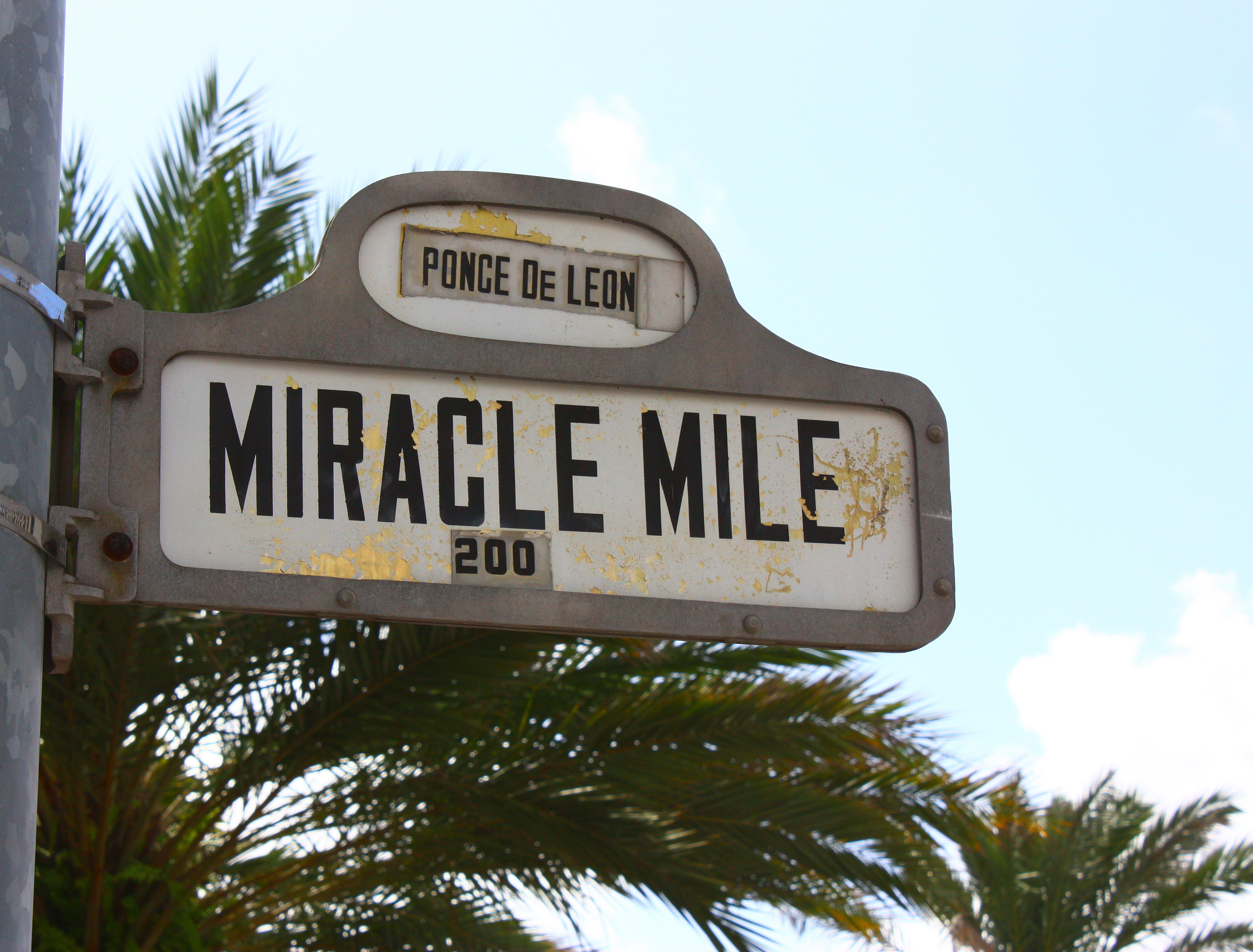
One of my favorite places in Miami is a tiny French Bistro called Le Boudoir which has an terrific brunch menu.  The Miracle Mile location which is on the corner of Ponce de Leon and Coral Way  is perfectly located in the heart of a fairly quaint shopping district. It has an outdoor, covered seating area which is refreshing during the Fall and Spring and it’s perfect for people watching in a city where you’re mainly stuck in a car and in air conditioning.  The interior is tackily decorated in pink cushioned seats and booths which attracts my kind of patron among others including families coming from church, tourists (The Biltmore is nearby), and UM students. It’s eclectic to say the least and modern, but it has never struck me as pretentious.

They don’t serve anything you wouldn’t expect from a French Bistro at Brunch time.  Petit Dejuner includes croissants and croques of all genders and specialties range from quiches to eggs benny (the best I’ve had so far in Miami, though I’m open to suggestions.) People rave about the Macaroons, but I’ve never had the appetite for them. One of these days I’ll drop by. The pricing seems fair and although the menu clearly says the gratuity is not included, it has always been included (maybe it’s me!), and they are generous to themselves even when the service is mediocre.

I can overlook whatever flaws Le Boudoir has because of its location. Miracle Mile is a terrific little strip of Coral Way, perfect for window shopping and ‘caféing’ (yes, it’s a verb now). It’s one of the few locations in Miami that can still have two Starbucks across the street from each other and have those both survive. As an added plus, it’s a few blocks away from Books & Books which will kick B&N a** any day of the week.

Post Navigation