Sometimes a Good Notion

The Iron Lady & W.E.
As if last year’s best picture upset wasn’t enough the Weinstein’s are back teaching us all how a film campaign is actually run.
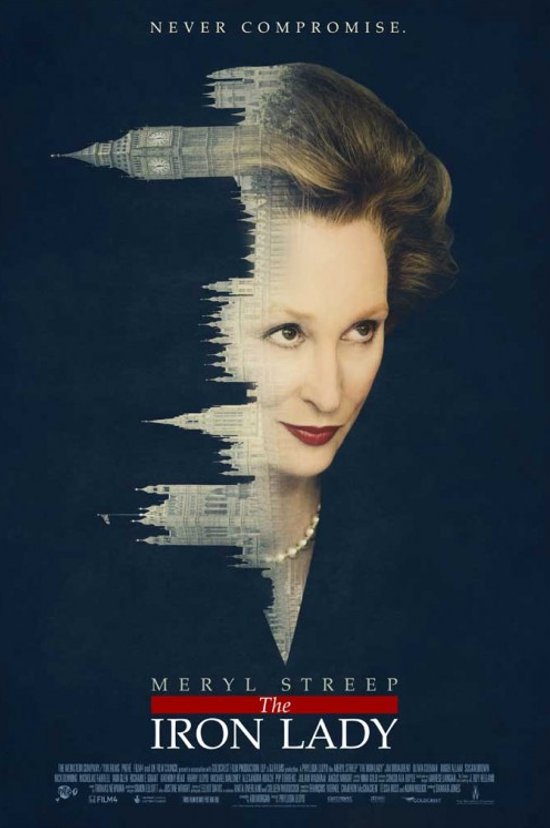 First , with the fantastic trailer for The Iron Lady the race for best actress is officially on and Viola Davis has some tough competition.
And yesterday W.E., which was ravaged by critics in Venice, got the Weinstein touch. They present a luscious trailer that makes you wonder if all the negative hype was actually accurate.
This will be an interesting campaign to follow as TWC seems to have  embraced offering W.E. as a bit of stylish pop culture befitting it’s director rather than as a grand cinematic opus. The stills they’re offering up are absolutely stunning and are being provided in more stylish venues like W Magazine, Harper’s Bazaar, Vanity Fair and the Little Black Gallery in London. By focusing on the image rather than its star TWC could have a strong contender in Costumes, Production Design, and Cinematography. The artists behind these categories are Cinematographer Hagen Bogdanski (The YoungVictoria),Costume Designer Arianne Phillips (The Crow, A Single Man), Production Designer Martin Childs (Shakespeare in Love). Both Phillips and Childs have received previous nominations in Weinstein handled films.
Production Forms
Here is a general collection of production forms by category. They can be used as is or you can create your own using this format.
MDC Formatted Forms
MDC Cast Scene Number Breakdown
MDC Production Requirement Checklist
MDC Script Supervisor Continuity Log
MDC Script Supervisor Wrap Report
SAG Paperwork
Limelight
 Terry: I thought you hated the theater?
Calvero: I also hate the sight of blood, but it’s in my veins.
The story is simple. Calvero, a clown and a drunk, stumbles into his building one day and smells a gas leak just as he’s about to light his cigar. He breaks down the door to the apartment where the leak is coming from and finds Terry, a suicidal prima-ballerina, lying unconscious on the bed. Calvero saves her life despite his drunkenness and over the months that follow Calvero discovers that Terry is, simply put, insane. She is so afraid to live that she has convinced herself to have series of crippling diseases that prevent her from going on, literally. She has psychosomatically convinced herself that she is paralyzed and can never dance again. Calvero will have none of it, first with inspirational speechifying and later with fierce physical brutality he commands her to live. It is this relationship which is the impetus for Terry’s recuperation and triumphant return to the stage. Through flashbacks and their interactions we discover that Calvero was a successful clown and an alcoholic who believed the only way to be funny was to be drunk. His fast life led to a heart attack and rejection from his once adoring audience. He too must recover and find the courage to be great once more.
From the first few minutes of the film we know we are in strange territory. Limelight is a talkie, Charlie Chaplin speaks. If you have never heard him speak, he has a gentle accent and overall pleasant voice.
The film is also dramatic. It deals with suicide, death, and failure. Long gone are the days of the Tramp. Chaplin however uses similar techniques as in his earlier successes to create the comedy in Limelight. Chaplin’s Tramp was about contrast. He was a bum who was also elegant and refined. He’ll eat his boot but he’ll do it with class. It was this game between the reality of poverty and the uselessness of manners that allowed Chaplin to offer his most poignant critiques and create brilliant comedic moments. In Limelight the contrasts are between Clown and Ballerina. Terry, played by the gorgeous Clair Bloom, is young and delicate. Calvero is the polar opposite (Chaplin was 63 when the film was made). It goes beyond age and looks though, her disposition as someone who is so willing to give everything up despite her opportunities makes Calvero’s desperation to cling onto life all the more meaningful, funny, and touching.
Limelight is not without its flaws. Bloom stage acts throughout the film offering no subtlety. The script is over written leaving nothing unsaid. And the scenario is melodramatic making the combination deadly by today’s standards. What keeps it from collapsing is Chaplin who gives a quiet, nuanced, and personal performance. It might be clichéd to say, but when Chaplin is silent he is his most powerful. There is a moment in the film, right after he’s given a terrible performance and the crowd has walked out on him, when he looks in the mirror and you know he realizes that there’s no getting back from this. It’s quiet, reserved, underplayed and terrific storytelling.
This film must also be informed by its history as there is much beyond the text. Limelight was shot in 1952. By that time Chaplin had undergone a series of scandals that had made his relationship with audiences difficult. His social leanings, exacerbated by the  speech in The Great Dictator (featured above), also drew the attention of J. Edgar Hoover and Joseph McCarthy. According to many not only was Chaplin a pervert who slept with women half his age and fathered bastard children, he was also a communist. By 1952 the most famous’ man in the world had fallen from grace, the audience had left him, and on September 19, 1952 as Chaplin traveled to England, the US Attorney General revoked Chaplin’s permit to re-enter the United States where he had lived since 1914. He was an outcast, banished, much like Calvero’s failed clown, a comparison that is both apt and obvious.
The tragedy of it all is that despite this being Chaplin’s least political film it was banned in the United States and lost for two decades. It was released in 1972 and Chaplin won his only competitive Oscar for the score. He would return to the United States in 1973 to accept the AMPAS Lifetime Achievement Award.
Things You Didn’t Know About Me: Ten Favorite Books Edition
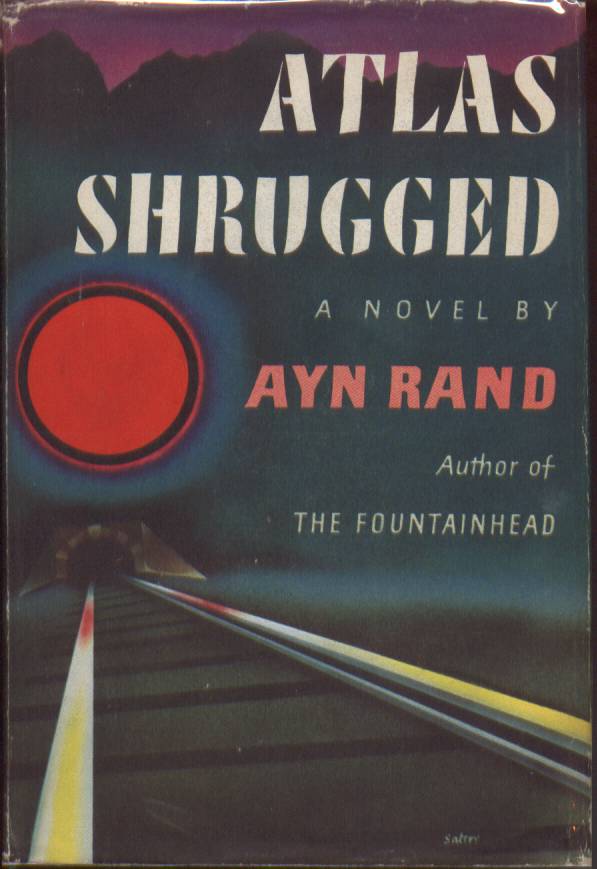 Atlas Shrugged – Ayn Rand : Everyone always told me to read it and in Grad school I found the time to pick up this massive book. I don’t particularly care for the politics and find the logic of Rand’s argument flawed, but the action in this book is exquisite. The pace is incredibly well timed and it’s a surprising page turner once you get past the repetitious hoo-hah. It is my lifelong dream to adapt this into a film, and I mean a proper one, with stars and a real budget.
Harry Potter: The Half Blood Prince – J.K. Rowling : My favorite in the series even if someone told me the ending before I had read it.
A Most Wanted Man – John Le Carre: I’ve read a lot of Le Carre, more of him than any other author, but  there was timeliness to this one that I hadn’t felt before. It takes place in Hamburg post 9/11 where the CIA, MI6, and the BND have converged around a disillusioned Muslim named Issa. Le Carre writes smart espionage driven by character and he builds tension by pitting idealism against the practicalities of espionage and mission. Extraordinary rendition is at the heart of the novel’s tension, and the questions Le Carre poses are worth considering.
Digital Fortress – Dan Brown: Though not as juicy as say The Davinci Code, Digital Fortress is non-stop fun. It’s my favorite Dan Brown book to date.
Cronica de Una Muerte Anunciada – Gabriel Garcia Marquez: This is a terribly convoluted and wonderful crime story. The idea that the everyone knew that Santiago Nasar was going to be murdered has stuck with me the majority of my life.
Our Man in Havana – Graham Greene: For me, if it’s not Le Carre it’s Greene. His bumbling fools turned spies are fun and relatable. His canon has a lot of great books, this is my favorite primarily because of location.
The Great Gatsby – F. Scott Fitzgerald: I just really wanted to go to the parties!
 The Catcher in the Rye – J.D. Salinger: Who doesn’t feel like Holden sometimes?
Beloved – Toni Morrison: This book needs to be read primarily for the brilliance of its structure.
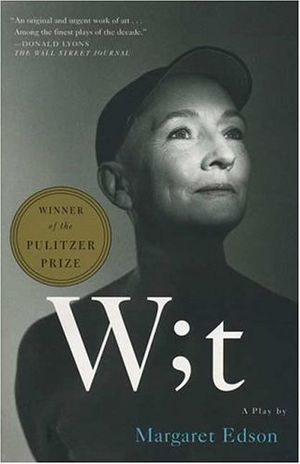
W;t – Margaret Edson: It follows poetry professor Vivian’s last hours of life as she dies from cancer in a hospital. It’s touching, intelligent, and full of humor despite the subject matter. The contrasts make it rich and wonderful. It can be enjoyed as a play or as an HBO movie starring the terrific Emma Thompson.
Super 8
 JJ Abrams pays homage to Spielberg in this fantastically entertaining adventure.
Abrams knows pop-culture and has been providing sleek entertainments for over a decade. With each (Star Trek, Alias, Lost) Abrams has supplied us with stories filled with cool and just enough depth to keep us interested. He is not however an innovator. His most successful works on screen thus far have been retreads of old stories and old themes we’ve seen before but Abrams manages to infuse each with so much youthful imagination that they are unexpectedly fun.
Super 8 falls squarely into this description. The story is straight out of Spielberg’s canon. At the crux of it is young Joe Lamb (Joel Courtney) who is coping with the death of his mother and a father (Kyle Chandler) who doesn’t quite understand him. He finds solace in a group of rambunctiously nerdy friends who are in the middle of filming an 8mm Zombie flick for a local competition. Mostly through happenstance the friends find themselves embroiled in a conspiracy to cover up the existence of a man-eating alien and must confront the being itself. Through all of the action, explosions, mayhem, and clever escapes, Abrams’ camera never loses sight of Joe who discovers that life is full of pain and loss and though even as it is important to remember he must also not forget to live on. The screenplay is classically structured with beautifully executed act breaks and an elegant resolution. Abrams is not subtle in telling his story but manages to get such fine performances that one can’t help but forget that you knew exactly what was coming.
There are some other players that also deserve some mention. Production Designer Martin Whist has built a terrifically complete 1979. There is an uncanny attention to detail unusual for a movie where you’re going to blow the set up. Whist and Abrams remember this period fondly and the art department here contributes greatly to the general feeling of nostalgia the film is desperately trying to create. From the wall paper to the carpeting, the design is understated and cues our memories to the period filling the fantasy with images that are very real to us.
 It would also be remiss if casting directors April Webster and Alyssa Weisberg were not mentioned. These ladies, long time collaborators of Abrams, have assembled a cast of young players that is worth noting. The chemistry between these kids (Joel Courtney, Ryan Lee, Riley Griffiths, & Gabriel Basso) is by far the most entertaining part of the movie. They play hysterically off each other better than the most seasoned professionals.
In the process of watching these kids the audience makes a few discoveries, the most promising of which is a young Elle Fanning. Fanning plays Alice, the white trash rebel of this Ohio steel town and the subject of all of the boy’s lust. Alice’s father (Ron Eldard) was involved in Joe’s mother’s death at the local factory. It makes for Joe and Alice to have an unusual emotional bond from the moment they first meet. Fanning plays the character with surprising maturity and intelligence. There is a scene early on in the film where the boys are getting ready to shoot one of the scenes in their Zombie movie. They have invited Alice to play the female lead but expectations about her performance are low. The director yells “Action” and form the moment Alice opens her mouth the boys are entranced. Their jaws drop, tears rush to their eyes. The scene plays well; it’s funny, very funny because that expression of awe and amazement at watching someone who possesses a rare talent is what the audience feels as we watch Fanning on screen.
The comparisons to Spielberg will be plentiful in the press, as they should be. Spielberg produced Super 8  and his work inspired it. Seeing the Amblin logo at the beginning of the film was as exciting for me as the movie itself. This logo has been absent from the theaters for the majority of the last 2 decades. I grew up on Amblin Films (E.T., The Goonies, Back to the Future, Gremlins) and Abrams, from the very first frames of Super 8 is trying to create a feeling of nostalgia not only for a period but for a type of storytelling that Spielberg popularized during that period. In this, Abrams is entirely successful and creates a product that not only reminded me of the movies I love, but also of why I love the movies.
 Sometimes a Good Notion