Memorable Shorts from 2012 – (notes on) biology
If my students doodled like this in class I would give them all an A
If my students doodled like this in class I would give them all an A
Seuss tells the story of Ted Geisel, AKA Dr. Seuss, as he struggles to become the writer we all love. The story is divided into two timelines. The first revolves around a young Seuss as he heads off to Dartmouth and meets Helen who he later marries. The second concerns Seuss, now in the middle of his career, as he struggles to deal with Helen’s illness and prepares to write The Cat in the Hat. The stories read as a series of flashbacks and flash forwards that are weaved together by Helen’s constant love and desire to push Seuss to embrace his own eccentricities and become the man he came to be. I walked into this script with high expectations and was moved by some of the storytelling, particularly in the third act. However, I couldn’t help feeling that there is more to this story than is being presented on the page.
This is a Seuss rife with insecurities about his future. Propagated by a father, T.R., whose one desire is to see his son grow to be a responsible man, both young and old Seuss spend the movie in various stages of doubt about their abilities and their futures. Fortunately for them both they have Helen who encourages them forward with blooming affection. In addition, Seuss also has a mother, Henrietta, who from a very early age encourages his fantasies but is helpless to stop T.R.’s assaults on Seuss’ confidence. Both Helen and Henrietta struggle to encourage Seuss to embrace who he is without doubt or remorse. They are interchangeable characters and in this lies the primary problem of the script.
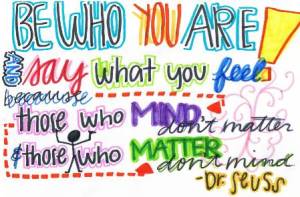 The relationships, as written, are honest and moving but each timeline is just repetition. What happens in the past is still happening in the present. The parallels between the stories are clear but the script fails in using them to complement each other. They are in essence the same story and it never moves forward until the third act. Helen and Henrietta repeat different versions of the same mantra — be yourself, be yourself, be yourself — until it feels like a cliche. Troubling as well is a father figure who never, not even in Seuss’ darkest moments, gets an opportunity to redeem himself. He is too clear an antagonist rather than a man with his own conflicted feelings about his son’s future or his love for Seuss. These three characters are in desperate need of arcs.
It is not just the supporting characters that are problematic however. Seuss himself never feels quite realized. He never expresses desire or need. His eccentricities and talent strike us as just that. He can draw and come up with funny names for ordinary things but his genius is not a burning passion that he simply cannot be without. Why is it important that he see things this way? Not even love makes Seuss act or fight because it comes too easy. Women simply replace each other, fullfil their duty, and in the process perpetuate stasis.
What was most surprising is that by the end of the story we still don’t know how Seuss sees the world. A man such as Seuss must have had a fantasy life incomparable to other men. Yet, only on two occasions in this script do his characters come to life. Those moments are welcome reprieves in what is overwhelmingly a stale script because they give us a sense of how Seuss copes with life, love, disappointment, and death. More of that, please.
Directed by Rob Chiu
Shot and scored beautifully, The Division of Gravity puts words to the emotion rather than the narrative and succeeds in creating an intimate portrait. It feels personal and complete. I find the way in which the characters think of their relationship to be honest. These images aren’t mired in action and reaction, the moment they met, the moment they moved in, etc. The highs are much smaller and personal. They are caresses, kisses, and pictures taken while the lows are explosive as they usually are, and as we usually remember them to be.
My expectation when going to see a Ridley Scott film is that it will be good work. With Prometheus, however, the studios promised nerdtopia. Here it was; a legendary director returning to the sci-fi canon that endeared him to the world in the first place. A multi-million dollar marketing campaign that included some of the best use of viral media I have yet seen for a film. A cast of talented actors picked fresh from the pop consciousness. I ran to the theaters on opening weekend to be delivered onto paradise. How could it go wrong?
The answer is simply that it can’t, Ridley Scott always turns out good work. The effects are stunning. The movie holds tension and scares you (grosses you out too) once it gets going. On the surface it works phenomenally. The problem with Prometheus is that it never penetrates that surface. The script is more an opera than a film. It lacks the subtext that Scott can and has delivered in previous work.
Prometheus deals with a group of astronauts in search of God. These scientists are on a mission funded by Peter Wayland, the man who created artificial life on earth, a god himself. They are on a ship named after the Titan punished for giving humans fire which allowed us to progress and come to be on equal footing with the gods. The film is chock-full of daddy issues. Who is our father? Why did he abandon us? Why did he betray us? Why must he punish us for wanting to be like him? It would be powerful stuff if it were not said. From the get-go these existential issues of faith are treated literally rather than figuratively.
There are no allusions or metaphors. The characters just talk about these things. They actually ask some of the questions I listed above. The screenplay lacks the fundamental understanding that these questions are unanswerable and to design a plot structure on the premise that your characters will find answers is absurd. It can have no resolution. It becomes laughable and melodramatic. There is a moment where Theron’s character utters the word “Father”, I won’t spoil the plot, but there is no amount of talent in the world that would not make that line contrived in the moment in which it is delivered. There are a lot of these moments.
Lindelof and Spaihts, the writers here, deserve the lion’s share of the blame. A simple look back at Scott’s own filmography, Alien and Blade Runner, would have showed them what subtlety looks like. Both of those films are thematically dense but never overbearing. Don’t get me wrong, go see it in the biggest screen possible. It’s eye candy and a perfect distraction for the summer, it could have just been more thoughtful.
There are stories that you read and you like and there are stories that you like so much that they stick with you over many years, sometimes even forever if you’re lucky. Take This Waltz by Sarah Polley is a story I have thought about countless times over the course of the last year.
Take This Waltz follows Margot. A twentysomething writer who has been married for five years and is flirting with the idea of having an affair. Margot however is afraid, afraid of being afraid to be precise. She is sensitive and a bit naive. She understands the paralyzing effect of fear and has become so terrified of the prospect of being stuck by fear, that she is stuck.
Margot can make no decisions; not about love, life, or her career. What she does well is make excuses and has plenty of reasons for not doing all of the things she yearns to do… love, live, write. By the end, the reader discovers what they already know. This yearning that Margot feels is simply life taking its course. Everything that once was young must turn old. The boyfriend who becomes husband, the body that sags, the mind that forgets. What we learn is that once this yearning to replace that which doesn’t satisfy us as it used to is fulfilled, it is replaced by a new yearning. The question becomes, when do we accept this? Like the character of Geraldine explains to Margot “In the big picture. Life has a gap in it Margot. It just does. You don’t go fucking crazy and try to fill it like some lunatic.”
Or don’t you?
I feel kinship to Margot. But the screenplay succeeds not only because of its main character, it succeeds because it is utterly ordinary. It sounds and feels like life. The characters are not characters in a movie, they are me, colliding with the fact of being alive. It’s a beautiful thing.
Trailer:
Moore’s script was selected to the top of the Blacklist last year. The logline they used was the following: “The story of British WWII cryptographer Alan Turing, who cracked the German Enigma code and later poisoned himself after being criminally prosecuted for being a homosexual..” It immediately caught my attention and I have been in search of this script for the better part of a year. When I finally got my hands on it last week I delved right in and was completely delighted by it.
Moore does far more than to biographize Alan Turing. The Imitation Game reads more like an Espionage Thriller than a Bio-Pic. In this aspect the story is mediocre, trudging along from plot point to plot point and solving the central mystery of the film through sheer coincidence rather than the prowess of the main character. Where Moore succeeds, excels in fact, is in the creation of Turing himself.
The Turing we get is whip smart, socially inept, unintentionally hysterical, and a complete bastard. Turing doesn’t care what people think of him. His pursuit is solely focused on the few things that challenge him in this world. The mysteries thought impossible to solve. The enigmas. In this pursuit he is a bulldozer swinging and thrashing, destroying everything in his path including every relationship he’s had and the possibility of ever being happy.
The script follows three distinct timelines and does so effortlessly. The primary timeline is about the solving of Enigma but it is in the sub-plots that the most interesting aspects of this script reside. Moore cuts back and forth from the present where Turing is being investigated by police for being a homosexual to Turing’s childhood where he meets Christopher Morcom, his first love. These two narratives inform the solving of Enigma and fill Turing’s behavior with intelligent if not subtle subtext.
Moore creates a Turing who is concerned with understanding his own difference. We see him try to adapt and imitate. To explain it logically. Turing tries to play the game as we all do but fails miserably because of his own ego. Moore, very adeptly, never lets us forget that Turing is not a hero despite saving millions of lives. He is a tragic figure hell bent on self destruction.
I’m not teaching History of Film this term. When this happens I get a rare opportunity to reexamine my lectures and class plans. I find it much easier to be objective about my work when I’m not neck deep in the pressure of having 3 hours of lecture prepared each week.
 I stop myself on a lecture I do on Leni Riefenstahl which, even when I give it, feels incomplete. As if there is something that I want to say about her but can’t. The lecture itself is well designed. It consists of about 40 minutes of Riefenstahl history including up to the beginning of her work for the Nazi Party. Then about 1 hour of footage from Triumph of the Will accompanied with my commentary on shot composition and technique. Then 15 minutes of her Post Nazi history accompanied by 20 minutes of the terrific documentary The Wonderful Horrible Life of Leni Riefenstahl. This leads the students to a sometimes heated discussion about art and responsibility, which is exactly where I want them to be by the end of the class. The lecture works as intended and the student is forced to think.
Controversy is not the problem. I do full days on Griffith and Kazan. I want my students to think about how they as filmmakers are communicating and the reasons they are communicating. It’s not the controversy that makes the lecture seem unfinished and messy. It’s that Riefenstahl feels alone. Outside of the narratives that other filmmakers fit into. She doesn’t belong to a movement or school that can be easily surmised in bullet points. Her story is unique, and perhaps I’m not helped by introducing her “as the only female director we will be discussing.”
And so I sit here, reading my lecture, wondering if Riefenstahl can be put into any context other than the Nazi story I’m used to telling. Is hers the story of female directors? Alongside what filmmakers can she be placed? Or is Riefenstahl’s narrative so unique, so strange, so self made, that she is forever relegated to being studied alone?
I’ve read Stoker twice this year. The first time I was on a plane to Italy.I didn’t know what to make of it. I couldn’t figure out the appeal. To be fair, I did have a few glasses of wine during the reading, which in addition to the jet-lag, might have contributed to my overall state of confusion regarding this script and life in general. However, the script’s weirdness stuck with me and I vowed to read it again.
I did so recently and found a beautifully told coming of age story. One filled with violence and murder. One akin to Stand by Me or other dark visions of lost innocence. Mr. Wentworth is concerned with the experience of maturing as one with tough and almost impossible choices that cannot be put off . The coming of age is the coming of self, and the self we choose to become in that moment (our adolescence) is the self we will be for the rest of our lives. It’s a bit of a depressing vision of growing up but it effectively keeps the stakes high and feeds the script enough tension to keep it interesting.
Stoker tells the tale of Indira Stoker, a strange and solitary girl dealing with the death of her father. Complicating matters are her apathetic and fabulous lush of a mother and an uncle whose visit comes as a surprise to all of them. Charlie, her uncle, brings with him an arsenal of violent intentions and transformative family secrets. No one in his wake will ever be the same.
From the first page Mr. Miller demonstrates that he can do much more than break out of prison (couldn’t help myself). He opens on the image of a spider living inside a piano who is disturbed by the pounding of the keys. The spider makes it’s way out of the piano to explore the source of the intrusion only to meet its squishy, gooey, and violent demise under the foot of Indira Stoker. It is a very telling moment when she, “with no more than a glance”, fails to consider the violence of her action or the death she has just caused. Will she approach her life that way? Is that who she will be? These are the question Mr. Miller poses of his character and he is relentless in pushing her to discover the answers.
It’s a phenomenal piece of writing, really… It’s enhanced by beautiful prose rare in a screenplay and a hell of a lot of personality which Mr. Miller successfully incorporates. The result is a brooding meditation on growing up and I am sure that in the hands of a director like Chan-Wook Park it’s going to make for a very interesting watch.
            GAGA
When I look back on my life, it’s
not that I don’t want to see things
exactly as they happened, it’s just
that I prefer to remember them in
an artistic way. And - truthfully -
the lie of it all is much more
honest because I invented it.
Clinical psychology tells us,
arguably, that trauma is the
ultimate killer. Memories are not
recycled like atoms and particles
in quantum psychics - they can be
lost forever. It’s sort of like my
past is an unfinished painting, and
as the artist of that painting I
must fill in all the ugly holes and
make it beautiful again. It’s not
that I’ve been dishonest, it’s just
that I loathe reality. For
example, those nurses - they’re
wearing next season Calvin Klein,
and so am I. And the shoes - custom
Giuseppe Zanotti. I tipped their
gauze caps to the side like
Parisian berets - because I think
it’s romantic, and I also believe
that mint will be very big in
fashion next Spring. Check out this
nurse on the right, she’s got a
great ass. Bam.
The truth is, back then at the
clinic, they only wore those funny
hats to keep the blood out of their
hair. And that girl on the left -
she ordered gummy bears and a knife
a couple of hours ago. They only
gave her the gummy bears.
I wish they’d only given me the
gummy bears.

           NURSE
Good morning morphine
princess. How are you feeling?
Everything went really well. Look
at you, I remember when I delivered
you, you looked just like your
mother.
            GAGA
Except my mother is a saint.

            NURSE
Tachycardia. Heart rate is 120.
            GAGA
I’m gonna make it.
            NURSE
No intimacy for two weeks. Blood
pressure 90 over 40. A little low;
but then again you’ve always been
on the low side.
            GAGA
I’m going to be a star. You know
why? Because - I have nothing left
to lose.
            NURSE
Do you need anything else?
            GAGA
Just un petite peu de la musique.
Later.
            GAGA
You may say I lost everything, but
I still had my Be-Dazzler and I had
a lot of patches, shiny ones from
M&J Trimming, so I wreaked havoc on
some old denim. And I did what any
girl would do -- I did it all over
again
Walt Disney (and animation in general) tends to get passed over in most History of Film classes. When I was assigned to teach the subject I made a Norquist style pledge not to do this in my class. My discussion of Disney started small, a mere showing of Steamboat Willie during a lecture of sound seemed appropriate. But as I learn more about the artist his prominence in my class has grown and he’s now comfortably discussed as a part of a series of lectures that cover German Expressionism, Neo-Realism, Sound, and Surrealism.
Disney was a versatile artist who borrowed and played in a way that few artists did at the time.
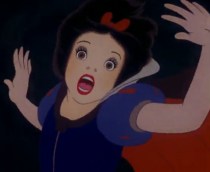 What I admire most about him was that he found ways to incorporate strange and wonderful influences into his work and still managed to tell stories that had wide appeal. From the image and brand that he built around his name it would not seem that he had an extravagant bone in his body, but when I play sequences like Snow White’s run through the forrest, the Queen’s transformation in the same movie, or Dumbo’s pink elephant dream I can’t help but to be amazed at how he used the work of filmmakers like Murnau, Lang, Lewis, Brunuel, and Dali to structure his sequences.

His early films have darkness and violence hidden beneath the glossy surface. Snow White’s Run through the forrest is closer to an early horror film than a children’s fantasy. By using techniques not associated with children’s entertainment, Disney was able to create dynamic contrast that made the stories interesting and sometimes frightening.
Throughout the first twenty years of his career, when he arguably did his best work (Fantasia, Snow White, Pinochio, Dumbo), he would sprinkle his films with mainly european concepts of storytelling such as dream logic, theatricality, high contrast, and stylization to symbolize a character’s emotional state. Disney’s acceptance of modern artistic concepts would put him on a collision course with Salvador Dali who he would meet and form an unlikely partnership with in the 1940’s.

One could not think of two artists so diametrically different from each other. Disney with his squeaky clean American image, and Dali with his confrontational eccentricity. Yet these men also shared the common goal of creating beauty in a world that kept tearing itself apart. The two unlikely partners decided to collaborate on a short animated musical piece which told the story of Chronos, the god of time, and his tragic love for a mortal dancer. The piece would be called Destino.
The collaboration would span a few years but would ultimately fall appart due to contractual and financial differences. However, the break up left in its wake over 200 original sketches, 13 paintings, and storyboards all by Dali which would remain in the Disney vaults for over 40 years. A holy grail if there ever was one.
I would not be until 1999 that Roy Disney would begin to finish the film. With the help of the Disney Studios in Paris and Director Dominique Monfrey, Roy Disney set to the task of completing this short piece of animation history.
The story of these two men would continue to fascinate writers and bloggers for years and details about this partnership have continued to trickle out. Letters between these two artists have been released to the public revealing a far deeper friendship than previously thought and deepening the mystery of this collaboration. For me, the most interesting tid bit of information is one particular detail of their contractual obligation to each other. Disney and Dali agreed that Disney could hold the paintings but would not own them until the film was completed. It is as if they knew that their styles and the practicalities of filmmaking would eventually stop them short of completion, but they made it impossible for future generations of money men at Disney to leave the work unfinished.
 Sometimes a Good Notion