Sometimes a Good Notion

Archive for the category “Film”

Sasha Stone on the F Word

fem2I have been following and reading Sasha Stone for over a decade.  I do not always agree with her, but I do believe she has been integral to legitimizing online film criticism. She recently posted the following article: Schooling Shailene Woodley on the Word Feminist, and it is a must read.  Though I do feel that Ms. Stone should have probably taken a breath before she started typing, the article encapsulates why Woodley came off so embarrassingly ignorant in her interview with Time and in further interviews she has given on the subject.

I wanted to like Ms. Woodley, that is no longer possible, but it is not too late to correct the perpetuation of the ideas she is espousing. It is too important not to. There is too much at stake.

“Whatever each individual woman is facing; only she knows her biggest challenge. However, if we add up the problems that affect the biggest numbers of women, then issues having to do with physical safety and reproduction are still the biggest. Female bodies are still the battleground, whether that means restricting freedom, birth control and safe abortion in order to turn them into factories, or abandoning female infants because females are less valuable for everything other than reproduction. If you add up all the forms of gynocide, from female infanticide and genital mutilation to so-called honor crimes, sex trafficking, and domestic abuse, everything, we lose about 6 million humans every year just because they were born female. That’s a holocaust every year. It makes sense that reproductive freedom is still the biggest issue – because the reason females got in this jam in the first place was because the patriarchal state or religion or family wanted to control reproduction — to decide how many workers, how many children the nation needs, and who owned them in systems of legitimacy — or even outright slavery. The International Labor Organization says there are about 12 million people living in literal slavery around the world, and 80 percent of them are women and girls.”

                                                                                                                                                  Gloria Steinem

Catch of the Day: David Lynch on Where Ideas Come From

I just had this conversation with my Screenwriting 1 Class this week.  Very well put by the ever insightful David Lynch.

New & Notable: SLOMO

Dir: Josh Izenberg

A beautiful documentary about a man who found the light and now pursues his own form of divinity. You can call him crazy or you can call him free, however you interpret it will say more about you than it does about him.

Izenberg needs to be commended here on some gorgeous cinematography and style. His camera glides, very much like Slomo, throughout most of the film to excellent effect. There is also a surprising mix of styles that blend together naturally. The director uses animation, time lapse, and slow-motion to enhance his subject’s story. He keeps it visually compelling which adds a playfulness to the narrative that matches the own inner freedom the Slomo seems to be experiencing.

Do what you want.

slmo

New & Notable: 43,000 Feet

Directed By: Campbell Hooper

“My name is John Wilkins. I’m a statistician.  And I have a few things to say to those that will one day find themselves in the position of trying to survive falling from a great height.” 

images (1)When statistician John Wilkins is sucked out of a plane at 43000 feet, he calculates that he has exactly 3 minutes and 48 seconds before he hits the ground.  This is devilishly witty writing because it is mostly all a ruse. As this man contemplates the past and the future, it is his current predicament that is most clearly in his head.  The present triggers his contemplation, it leads to the conclusion that only the past matters, and he accepts his utter lack of control over the present with a simple “Good Luck”.  It’s funny as hell and a little bit scary.

Hooper relishes in the humor and does it with great visual style. The color and lack of clarity as it relates to the physical world allows the audience to focus entirely on the words. He never gives a full picture, but each frame is beautifully composed.  His manipulation of the image serves as a terrific counterpoint to the eerily monotone voice that carries the narration. His angles, sound, and the sudden changes in style drive up the tension very effectively. This is a must see.

Catch of the Day: Joaquin Phoenix on Fresh Air

images

I heard this the other day on NPR. It’s always great when you get  an actor to talk about their craft,  even if they do so reluctantly. I love the fact that he refers to himself as an employee with a “job to do”.  This is definitely worth a listen.


Catch of the Day: Manohla Dargis’ Appeal for Sanity

Last week, New York Time’s film critic Manohla Dargis provided her assessment of the independent film business.  This is a must read for anyone who loves movies.

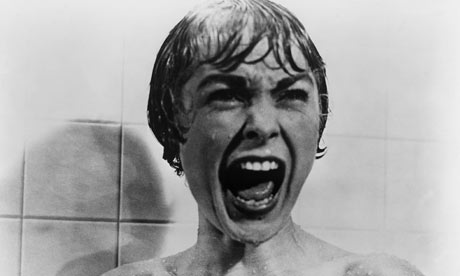
But I have a little favor to ask of the people cutting the checks: Stop buying so many movies. Or 1960-PSYCHO-001at least take a moment and consider whether flooding theaters with titles is good for movies and moviegoers alike. Because no matter how exciting Sundance will be this year, no matter how aesthetically electrifying, innovative and entertaining the selections, it’s hard to see how American independent cinema can sustain itself if it continues to focus on consumption rather than curation. There are, bluntly, too many lackluster, forgettable and just plain bad movies pouring into theaters, distracting the entertainment media and, more important, overwhelming the audience. Dumping “product” into theaters week after week damages an already fragile cinematic ecosystem.

It reminded a little of Short of the Week’s “Good” v “Great” essay.

Here is the article link

As Indies Explode, an Appeal for Sanity. Flooding Theaters Isn’t Good for Filmmakers or Filmgoers

New & Notable: Dog Meets Goose

Directed by John Bryant Crawford

2933920_origTragic characters are those with an inability to reason through the events of their lives in ways that seem appropriate to the rest of us.  There is a sense of inevitability that permeates a tragedy as a pattern begins to develop in the choices the characters make.  Great tragic characters will lead you to their disastrous conclusions expediently.  Their choices unravel in falling action that ultimately leads to their demise.  Dog Meet Goose, Directed by Jon Bryant Crawford is such a tale.

It is the story of a registered sex offender who gets an unexpected visit from a teenage boy.  Needless to say, it is NOT SAFE FOR WORK.   The performances and the direction here are a triumph.  I did not want to watch in full anticipation that whatever was going to happen was not going to be good, and at the same time I could not look away. This is provocative cinema the likes of which you would expect to see from Harmony Korine or Von Trier.

There is also something about this film that is representative of a tragedy that is particularly American.  Tragic heroes, in the classical and Elizabethan approaches, are men of renown who fall from immense heights.  American tragic heroes, like “MAN”, our unsuspecting sex offender, are downtrodden when they begin their journey.  They don’t have far to go to hit rock bottom, and once their tragic flaws are laid bare it is most usually shameful and difficult to watch.

If you have the stomach for something difficult, then I highly recommend this film.

Script of the Week: A Monster Calls by Patrick Ness

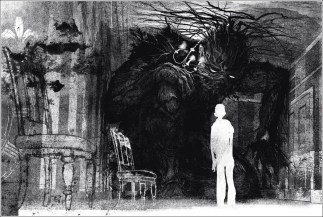
monster-4-adult I have been plugging away at this year’s Black List Scripts waiting for something to inspire me.  Last night I read the brilliant A Monster Calls by Patrick Ness based on the novel by the same name and the same author.  I consider myself to be a pretty good audience member, I typically laugh on cue, cry on cue, etc. I commit emotionally to what I’m reading, giving myself to the material no matter what it is. I can tell you that I have not cried like this when reading a script for a few years (not since The Muppet Man).

The story as described in the Black List logline: An adolescent boy with a terminally ill single mother begins having visions of a tree monster, who tells him truths about life in the form of three stories, helping him to cope with his emotions over his dying mom.

Connor is a whip smart teenager in a tragic situation.  We have met him before in countless movies.  The difference here is that Connor dreads the little moments of empathy that people shoot his way; he detests the compassion and caring.  He is a young man desperately in need for his experience to be over.  In that silent desperation, he summons a monster.  A horrible monster that threatens him with the thing that Connor fears the most, the truth.  “I will tell you three stories.” The monster tells Connor. “Stories are the wildest things of all. Stories chase and bite and haunt.  And when I have finished my three stories, you will tell me a fourth, and it will be the truth.  Your truth.”

A Monster Calls. Patrick Ness.

The stories are simple parables that play out as short shadow plays throughout the film. They add a distinctive visual element to the writing of an already unusual and beautiful script.

I spend my semesters encouraging my students to write visually. I tell them to write the picture … write the picture.  But what I liked most about this script, was that instead of relying on the strength of the picture, it relied on the power of the spoken word.  This is a film about the stories that we tell each other in order to understand our experiences. It’s quite a formidable trick to pull off.

Someone please make this movie ASAP. 

Catch of the Day: Harry Belafonte on Steve McQueen

I thought this tribute speech was a very appropriate way to start the year and hopefully the beginning of a term where I can post much more than in previous years.

12yasThe power of cinema is an uncontainable thing and it’s truly remarkable, in its capacity for emotional evolution. When I was first watching the world of cinema, there was a film that stunned the world, with all its aspects and art form. They did a lot, at that time. The film was done by D.W. Griffith, and it was called The Birth of a Nation, and it talked about America’s story, its identity, and its place in the universe of nations. And that film depicted the struggles of this country with passion and power and great human abuse. Its depiction of black people was carried with great cruelty. And the power of cinema styled this nation, after the release of the film, to riot and to pillage and to burn and to murder black citizens. The power of film. 

At the age of five, in 1932, I had the great thrill of going to the cinema. It was a great relief for those of us who were born into poverty, a way we tried to get away from the misery. One of the films they made for us, the first film I saw, was Tarzan of the Apes. [Ed note: The movie is called Tarzan the Ape Man.] In that film, [we] looked to see the human beauty of Johnny Weissmuller swinging through the trees, jump off, and there spring to life, while the rest were depicted as grossly subhuman, who were ignorant, who did not know their way around the elements, living in forests with wild animals. Not until Johnny Weissmuller stepped into a scene did we know who we were, according to cinema. 

Throughout the rest of my life … on my birth certificate, it said “colored.” Not long after that, I became “Negro.” Not too long after that, I became “black.” Most recently, I am now “African-American.” I spent the better part of almost a century just in search of, seeking, “Who am I? What am I? What am I to be called? What do I say? Who do I appeal to? Who should I be cautious of?” In this life, when we walk into the world of cinema, we use the instrument that is our ability to try to give another impression of who and what we were as a people, and what we meant to this great nation called America. I’m glad that Sidney Poitier should step into this space right after the Second World War, and new images of what we are as people, certainly as men. 

A lot’s gone on with Hollywood. A lot could be said about it. But at this moment, I think what is redeeming, what is transformative, is the fact that a genius, an artist, is of African descent, although he’s not from America, he is of America, and he is of that America which is part of his own heritage; [he] made a film called 12 Years a Slave, which is stunning in the most emperial way. So it’s a stage that enters a charge made by The Birth of a Nation, that we were not a people, we were evil, rapists, abusers, absent of intelligence, absent of soul, heart, inside. In this film, 12 Years a Slave, Steve steps in and shows us, in an overt way, that the depth and power of cinema is there for now the world to see us in another way.

I was five when I saw Tarzan of the Apes, and the one thing I never wanted to be, after seeing that film, was an African. I didn’t want to be associated with anybody that could have been depicted as so useless and meaningless. And yet, life in New York led me to other horizons, other experiences. And now I can say, in my 87th year of life, that I am joyed, I am overjoyed, that I should have lived long enough to see Steve McQueen step into this space and for the first time in the history of cinema, give us a work, a film, that touches the depths of who we are as a people, touches the depths of what America is as a country, and gives us a sense of understanding more deeply what our past has been, how glorious our future will be, and could be. 

I think that the Circle Award made a wise decision picking you as the director of the year. I think we look forward in anticipation to what you do in the future. But even if you never do anything else, many in your tribe, many in the world, are deeply grateful of the time and genius it took to show us a way that it should be. Forever and eternally grateful to say that we are of African descent. Thank you.
Catch of the Day: Andrew Stanton Ted Talk

Storytelling … is knowing that everything you’re saying from the first sentence to the last, is leading to a singular goal, and ideally confirming some truth that deepens our understanding of who we are as human beings. We all love stories. We’re born for them.  Stories affirm who we are. We all want affirmations that our lives have meaning. And nothing does a greater affirmation than when we connect through stories.  It can cross the barriers of time, past, present, and future and allow us to experience the similarities between ourselves and through others, real and imagined.   

download

Post Navigation