Catch of the Day: David Lynch on Where Ideas Come From
I just had this conversation with my Screenwriting 1 Class this week. Very well put by the ever insightful David Lynch.
I just had this conversation with my Screenwriting 1 Class this week. Very well put by the ever insightful David Lynch.
I’m in the middle of writing a new script. Whenever I am, I try to submerge myself in material related to what I’m working on. I sometimes do specific research to fill in gaps, the type of architecture, what people wore etc… But for the most part I absorb information in the hopes that it somehow finds its way onto the page.
I’ve been knee deep in it for a month and have made some great discoveries along the way and I am sure I will discover more as I continue.
My favorite so far is a letter written by Sullivan Ballou, a major in the Union Army, to his wife Sarah Hart Shumway.
July the 14th, 1861
Washington DC
My very dear Sarah:
The indications are very strong that we shall move in a few days – perhaps tomorrow. Lest I should not be able to write you again, I feel impelled to write lines that may fall under your eye when I shall be no more.
Our movement may be one of a few days duration and full of pleasure – and it may be one of severe conflict and death to me. Not my will, but thine 0 God, be done. If it is necessary that I should fall on the battlefield for my country, I am ready. I have no misgivings about, or lack of confidence in, the cause in which I am engaged, and my courage does not halt or falter. I know how strongly American Civilization now leans upon the triumph of the Government, and how great a debt we owe to those who went before us through the blood and suffering of the Revolution. And I am willing – perfectly willing – to lay down all my joys in this life, to help maintain this Government, and to pay that debt.
But, my dear wife, when I know that with my own joys I lay down nearly all of yours, and replace them in this life with cares and sorrows – when, after having eaten for long years the bitter fruit of orphanage myself, I must offer it as their only sustenance to my dear little children – is it weak or dishonorable, while the banner of my purpose floats calmly and proudly in the breeze, that my unbounded love for you, my darling wife and children, should struggle in fierce, though useless, contest with my love of country?
I cannot describe to you my feelings on this calm summer night, when two thousand men are sleeping around me, many of them enjoying the last, perhaps, before that of death — and I, suspicious that Death is creeping behind me with his fatal dart, am communing with God, my country, and thee.
I have sought most closely and diligently, and often in my breast, for a wrong motive in thus hazarding the happiness of those I loved and I could not find one. A pure love of my country and of the principles have often advocated before the people and “the name of honor that I love more than I fear death” have called upon me, and I have obeyed.
Sarah, my love for you is deathless, it seems to bind me to you with mighty cables that nothing but Omnipotence could break; and yet my love of Country comes over me like a strong wind and bears me irresistibly on with all these chains to the battlefield.
The memories of the blissful moments I have spent with you come creeping over me, and I feel most gratified to God and to you that I have enjoyed them so long. And hard it is for me to give them up and burn to ashes the hopes of future years, when God willing, we might still have lived and loved together and seen our sons grow up to honorable manhood around us. I have, I know, but few and small claims upon Divine Providence, but something whispers to me – perhaps it is the wafted prayer of my little Edgar — that I shall return to my loved ones unharmed. If I do not, my dear Sarah, never forget how much I love you, and when my last breath escapes me on the battlefield, it will whisper your name.
Forgive my many faults, and the many pains I have caused you. How thoughtless and foolish I have oftentimes been! How gladly would I wash out with my tears every little spot upon your happiness, and struggle with all the misfortune of this world, to shield you and my children from harm. But I cannot. I must watch you from the spirit land and hover near you, while you buffet the storms with your precious little freight, and wait with sad patience till we meet to part no more.
But, O Sarah! If the dead can come back to this earth and flit unseen around those they loved, I shall always be near you; in the garish day and in the darkest night — amidst your happiest scenes and gloomiest hours – always, always; and if there be a soft breeze upon your cheek, it shall be my breath; or the cool air fans your throbbing temple, it shall be my spirit passing by.
Sarah, do not mourn me dead; think I am gone and wait for thee, for we shall meet again.
As for my little boys, they will grow as I have done, and never know a father’s love and care. Little Willie is too young to remember me long, and my blue eyed Edgar will keep my frolics with him among the dimmest memories of his childhood. Sarah, I have unlimited confidence in your maternal care and your development of their characters. Tell my two mothers his and hers I call God’s blessing upon them. O Sarah, I wait for you there! Come to me, and lead thither my children.
Sullivan
Sullivan died during the First Battle of Bull Run on July 21, 1861, a week after he wrote this letter.
When I first moved here not so many moons ago I taught English for Speakers of Other Languages (ESOL) in Homestead Florida. I had many young students, too old for high school but at the right age to work towards some sort of collegiate training. I had this one kid name Chan, maybe 18 or 19 years old, from Indonesia. He didn’t know a lick of English, I mean 0, but he was bright and hard working. His parents would drive 40 minutes each way, every day so that he could sit in my classroom for three hours and then we would work for another hour privately. I dove in determined to teach him and did it for free because frankly I I had nothing else to do. I left Homestead about three years ago when I got the teaching post I now fill and had not seen Chan since.
Yesterday, as I was walking up the stairs towards my classroom, Chan was there chatting with a friend. He wasn’t waiting for me, just one of those coincidences. I got so excited I almost jumped out of my skin. He’s finishing up EAP and is probably less than a year away from starting college. It feels good to know that this time in my life was well spent.
Discovery: There is nothing more thrilling than a student who discovers something new and exciting about their story while they are writing it. I’ve had such a case this term with a student who found a theme on which he could build subtext that was not present at the time they started to write. They came onto to it, recognized it, and over used it as it happens with most writers. However, I give the student props for aspiring to make their story interesting.
Repetition: It is as if they forget what they just wrote or perhaps they think it’s so good that they need to write it over and over again. Repetition makes a script slow and bogged down with unnecessary words.
No Christmas gifts yet from them.
Every term ends the same way. A pile of scripts and script pages on my desk to read through and comment on. It will grow smaller every day like a bar of soap or a lipstick.
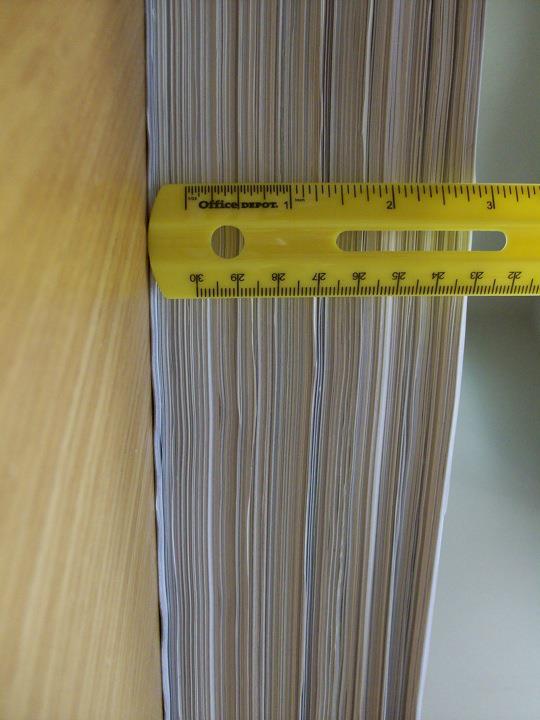
This has been on my mind for a few days and I’ve been unsure on how to approach the subject, but I decided what the hell… A large part of what I do is to provide students with the opportunity to have their work critiqued not only by me but also by their peers. For the most part students take a non-combative approach to criticism leaving the often-difficult work of dismantling a piece to me, which is understandable. On a few occasions I have had students that have reacted defensively to what have been tough critiques of their work and this got me reading up on the art of critiquing. During that process I found two perspectives that I tend to agree with.
The first is from an essay written by Jeffrey Di Leo in The Chronicle of Higher Education entitled In Praise of Tough Criticism. Di Leo writes the following:
But when it comes to criticism, is compassion really preferable to combativeness? Does an upbeat style actually encourage positive tendencies in the profession? Is compassion an intellectual virtue? The answer to those questions is no. If a compassionate, caring form of criticism entails removing the “critical” from “critical exchange,” then I would rather see the field move toward a more combative, confrontational style—even if it means ruffling a few feathers.
I agree with the assessment. On most occasions I only get one semester to make an impact in my student’s work. It might seem like an eternity to the student but it really isn’t that much time. It is my job to move the student past conformity. I do not approach that, I don’t think, by trying to convince the student that I’m right but rather by trying to convince them that there are approaches to their story other than their own. I hope I help them understand that as writers and filmmakers they are required to think more and settle less. Sometimes this is an impossible task and it can get rough which is when the second perspective I found on the subject comes into play.
It comes from a blog called Your Screenplay Sucks (one of my favorite reads on the internet). Screenwriter and critic Bill Akers argues that as writers we need to learn to Accept the Body Blow. He argues
Know it’s normal, however, to WANT to stand up and shout that they don’t understand the genius you have laid upon the world… just don’t do it. Resist the temptation to raise your hackles. Breathe deep and imagine they are NOT swinging a great Conan-size bloody battle-axe at your head… take notes and become a better writer.
The purpose of critique is to create positive tendencies. My goal is for the student to leave the classroom after one term and be able to identify their mistakes on their own. It is not, as some students believe, to demonstrate how much greater a writer I am. In fact I tend to end each term by giving my students a copy of whatever it is I am writing at the moment so that they can critique me. This is for the most part a lopsided event because I still havent given them their final grade, but it allows them to see that no one gets it perfect right-off-the-bat and that as artists they have to be willing to accept that.
 Sometimes a Good Notion