Things You Didn’t Know About Me: Ten Favorite Books Edition
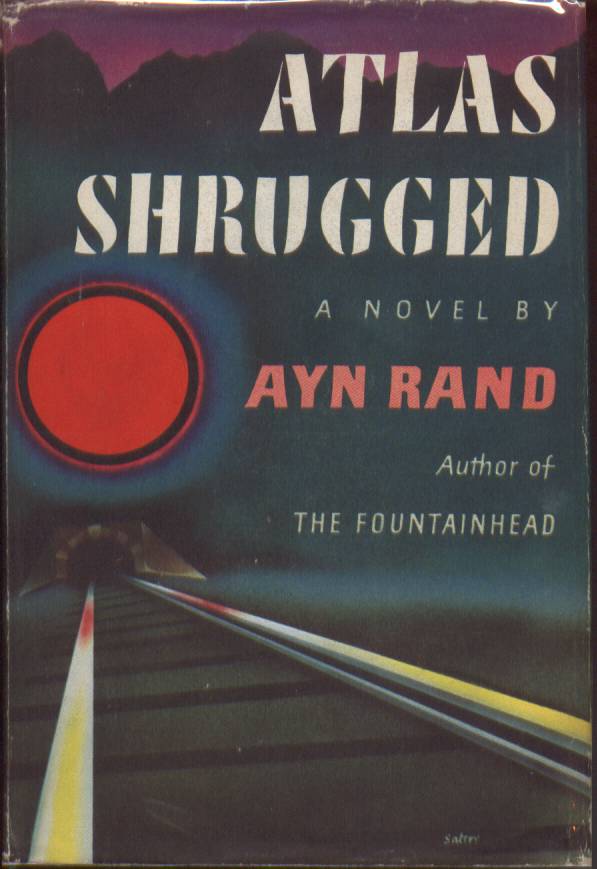 Atlas Shrugged – Ayn Rand : Everyone always told me to read it and in Grad school I found the time to pick up this massive book. I don’t particularly care for the politics and find the logic of Rand’s argument flawed, but the action in this book is exquisite. The pace is incredibly well timed and it’s a surprising page turner once you get past the repetitious hoo-hah. It is my lifelong dream to adapt this into a film, and I mean a proper one, with stars and a real budget.
Harry Potter: The Half Blood Prince – J.K. Rowling : My favorite in the series even if someone told me the ending before I had read it.
A Most Wanted Man – John Le Carre: I’ve read a lot of Le Carre, more of him than any other author, but  there was timeliness to this one that I hadn’t felt before. It takes place in Hamburg post 9/11 where the CIA, MI6, and the BND have converged around a disillusioned Muslim named Issa. Le Carre writes smart espionage driven by character and he builds tension by pitting idealism against the practicalities of espionage and mission. Extraordinary rendition is at the heart of the novel’s tension, and the questions Le Carre poses are worth considering.
Digital Fortress – Dan Brown: Though not as juicy as say The Davinci Code, Digital Fortress is non-stop fun. It’s my favorite Dan Brown book to date.
Cronica de Una Muerte Anunciada – Gabriel Garcia Marquez: This is a terribly convoluted and wonderful crime story. The idea that the everyone knew that Santiago Nasar was going to be murdered has stuck with me the majority of my life.
Our Man in Havana – Graham Greene: For me, if it’s not Le Carre it’s Greene. His bumbling fools turned spies are fun and relatable. His canon has a lot of great books, this is my favorite primarily because of location.
The Great Gatsby – F. Scott Fitzgerald: I just really wanted to go to the parties!
 The Catcher in the Rye – J.D. Salinger: Who doesn’t feel like Holden sometimes?
Beloved – Toni Morrison: This book needs to be read primarily for the brilliance of its structure.
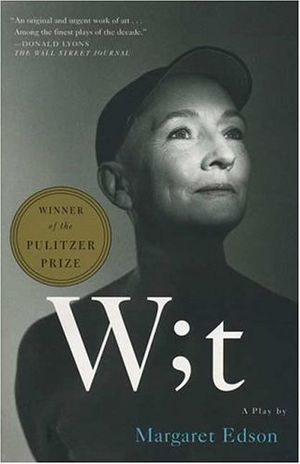
W;t – Margaret Edson: It follows poetry professor Vivian’s last hours of life as she dies from cancer in a hospital. It’s touching, intelligent, and full of humor despite the subject matter. The contrasts make it rich and wonderful. It can be enjoyed as a play or as an HBO movie starring the terrific Emma Thompson.
 Sometimes a Good Notion