New & Notable: Dog Eat Dog
 Petsami presents Dog Eat Dog directed by Sian Heder. This is a very clever and funny little story with great execution and pacing. Thoroughly entertaining from beginning to end.
Be simple, be witty.
Petsami presents Dog Eat Dog directed by Sian Heder. This is a very clever and funny little story with great execution and pacing. Thoroughly entertaining from beginning to end.
Be simple, be witty.
 With Star Wars being handed to JJ Abrams, Science Fiction moves forward into the new century with huge fanfare. In this environment the arrival of C 299,792 Kilometers Per Second, which harkens back to the days when filmmakers actually built things, feels quite refreshing.
The story is nothing new and the script could have used a few more drafts. Many more drafts… Most of the lines are undeliverable and the set ups feel awkward. The relationships are underdeveloped, the acting is stiff, and the situations forced. No amount of retro can save this film from its story. However, the work directors Derek Van Gorder and Otto Stockmeier do here in creating the visuals is outstanding.
The film will make waves on the internet because it is strangely innovative. The filmmakers describe the creative process as follows:
To build the future, we looked to the past. No CGI or greenscreen was used in the making of the film; all our sets and  props were built by hand and filmed in-camera. Combining new advances in digital camera technology with traditional special effects, we sought to create a unique, timeless look through lighting design, camera tricks, miniature photography, split-screen, and stop-animation. We believe that this approach allowed us greater creative possibilities on a low-budget science-fiction film.
The world they have created looks and feels tangible and is reminiscent of early science fiction films. It is also beautiful. They have taken advantage of digital technology to create exquisitely sharp and realistic images and they have paid great attention to basic cinematic techniques that further help create the world. Cinematography and sound  design are at their best here. There isn’t a frame that fails to use lighting and hue to create mood or a second where the humming of machinery doesn’t influence the work in the same way. Technique enhances the sense of here and now and never feels over done or pompous. If they had paid as much attention to the script then C 299,792 Kilometers Per Second could have been much more than an aesthetic piece.
Intriguing as well, is that the narrative is intercut with a film within a film. A documentary, titled Beyond the Infinite,  tracks human progress and provides us with the reasons humanity must take to space. Beyond the Infinite, also has its own retro feel which is used to enhance the aesthetic feel of the film. Shot in 16MM, its first frames throw us back to 70’s New Age science fiction documentaries and serve as a reminder of a golden age of a genre that we seem to be quickly leaving behind.
 Sex and the City, which ran from 1998 to 2004, coincided perfectly with the years I spent living in the New York City area. It introduced us to cosmos and hinted at the burgeoning renaissance happening in the meat packing district. It was a show we would talk about and gathered to watch every Sunday at Urge in the lower east side. Sex and the City however only stands up in the moment. As you watch it now, the puns are cringe worthy and the material shallow which is why the film versions have failed. But in the moment it was timely, or perhaps it was the vodka fused glasses through which I watched it. In either case, when I heard that they were creating a prequel to Sex and the City I was intrigued. When I heard it would be on the CW, I was less so.
The CW came to be in 2006, and with the exception of the first few seasons of America’s Next Top Model (I know you watched it too! Don’t lie!), there has not been a single bit of programming on the network that has appealed to me. They have however targeted teenage girls successfully and niched their network to appeal to that market. Needless to say, my expectations for The Carrie Diaries, the SatC prequel, were pretty low. In fact I considered passing it over all together, but then boredom hit one Saturday afternoon.
What I found was actually surprising. The show, as expected, is teenage melodrama. But it is candid and strives to be truthful in its representations of teenage love, sex, insecurities, and relationships. The similarities with its predecessor are few. It’s the story of a young Carrie Bradshaw, as in SatC, she has four friends; narrates each episode bringing the theme to light; and she loves New York, at least the one she dreams of. But the similarities stop there, and this is a good thing. What I liked most about The Carrie Diaries is that it tries and succeeds to be itself.
The show introduces us to Carrie, a high school student in suburban  Connecticut during the last days of summer. It isn’t an ordinary summer however, Carrie’s mother has just passed away and the Bradshaws must learn how to relate to each other after the loss. Carrie’s sister, desperate for a role model, is rebelling. Carrie’s father has no clue how to deal with two teenage girls. And Carrie feels responsible for everything. Like I said before, it’s teenage melodrama, but it is handled subtly and never struck me as overbearing.
As the school year starts, the show shifts to the gears it will grind for the majority of the season. The gaggle of friends who will help Carrie muddle her way through High School; the gorgeous Sebastian who is totally wrong for Carrie yet she can’t help herself; and the competition, Donna LaDonna, played devilishly by Chloe Bridges (above). The pilot sets up story lines for each of the characters and there is potential for interesting drama though nothing ground breaking despite the open use of marijuana and a closeted gay character.
The story book is straight out John Hughes and the production here throws us back to the days when Molly Ringwald ruled the screen. Everything from the costumes, the music, set design, and the wonderfully dated stock footage of  New York City, strike the right note. These 80’s are not glamorized but rather pedestrian and it helps with the overall tone of the show. And therein lies main difference between Sex and the City and The Carrie Diaries. Sex was aspirational; it presented us a world where everyone had money, drank sweet lush drinks, lived in hi-rises, and used the word fabulous freely. The Carrie Diaries strikes us as ordinary; there is nothing fabulous about these characters or their problems. Perhaps in making everything far more approachable, the producers will be able to strike far more honestly at the heart of their viewers than say a Gossip Girl ever could. It’s certainly worth a watch.
Directed by: Chris Wilson and Zach Persson
Filmmakers with nothing to do, or I should say who want to do nothing, audition actors for a movie that doesn’t exists. Hilarity ensues …
I open up Robert McKee’s Story to a random page and write about what I find.
McKee says:
Storytelling is the creative demonstration of a truth. A story is the living proof of an idea, the conversion of idea into action. A story’s event structure is the means by which you first express, then prove your idea… without explanation. Master storytellers never explain.
 What I love about McKee is that sprinkled through the 400 pages of Story are these nuggets of pure truth that every writer should take to heart. It is by no means original, Seger and Field say the same thing, but nobody does it with the same dramatic flair as McKee.
I have been carrying Story around with me for the last couple of weeks just waiting for an opportunity to open it. I was delighted that this was the random selection this go-around because it is typically one of the very first things I explain to students who are just beginning their journey as screenwriters or filmmakers.
We all commit the crime of falling in love with an idea. Many times we also try hard to write the idea, or pitch the idea when in fact we should be trying to write or pitch the story — the action. When a student begins to talk about their screenplay by saying “my story is about” I stop them and remind them that their job is to communicate action. Tell me what happens in the story, not what it’s about. To exemplify why they should do this I show them the scene from Sideways when Miles explains his novel. It goes like this:
                                     MAYA
                         So what's your novel about?

                                     MILES
                         Well, it's a little difficult to
                         summarize. It begins as a first-person
                         account of a guy taking care of his
                         father after a stroke. Kind of based
                         on personal experience, but only
                         loosely.

                                     MAYA
                         What's the title?

                                     MILES
                         "The Day After Yesterday."

                                     MAYA
                         Oh. You mean... today?

                                     MILES
                         Um... yeah but it's more...

                                     MAYA
                         So is it kind of about death and
                         mortality, or...?

                                     MILES
                         Mrnmm, yeah... but not really. It
                         shifts around a lot. Like you also
                         start to see everything from the
                         point of view of the father. And
                         some other stuff happens, some
                         parallel narrative, and then it
                         evolves -- or devolves -- into a
                         kind of a Robbe-Grillet mystery --
                         you know, with no real resolution.

                                     MAYA
                         Wow. Anyway, I think it's amazing
                         you're getting it published. Really.
                         I know how hard it is. Just to write
                         it even.

                                     MILES
                              (squeezing it out)
                         Yeah. Thanks.
After saying all of this, he has said nothing at all. It’s what typically happens when the writer believes it is the idea that communicates. In truth, it is the other way around. Like McKee says, story is the conversion of an idea into action. It is the summation of all events, from Inciting Incident to Resolution, which allows you to communicate the idea.
The act of understanding comes from the interpretation of action. What did the character do? How did he relate? What was the result? It is the answers to these questions that allow the viewer to understand what the movie is about. Without action there is no meaning … there is no art. Without action there is no idea, just the ramblings of a writer who doesn’t know what he/she just wrote.
A terrific rundown by Riley Hooper over at VIMEO Click Me
If you’ve considered the objectives and feel that it’s the right time and you’ve got the right film, then it’s time to get submitting! In this installment of Video School’s foray into film festivals we’ll consider the following equally-Earth-shattering questions: Where should I submit? and How?
First of all, a great resource to use is Withoutabox. This handy web site represents more than 5,000 festivals all over the world. From finding the festival, to filling out submission form information, to paying the submission fee, to submitting your screeners, the entire submission process for most film festivals happens right there.
Finding the right festival(s)
With thousands of festivals out there, it can be daunting to narrow it down. Think about your film and your audience. You may not be ready for this level of festival yet, but to put things into perspective, Cannes is brimming with prestige, with lots of world premieres and European art-house films. Sundance is more focused on the indie scene and discovering fresh talent. TheToronto International Film Festival is known for Hollywood distribution deals and well-established filmmakers. The Venice Film Festival is the oldest international film festival in the world and draws a lot of high-profile European films, and, as it goes hand in hand with theVenice Biennale art exhibition, film and video art. These festivals, aside from Sundance, aren’t particularly good for short films. There are, however, shorts-only festivals. Noteworthy shorts fests include Aspen Shortsfest, the Palm Springs International Shortsfest, and the Cleremont-Ferrand Inernational Short Film Festival. If you’ve created a short that you think is Oscar-worthy, make sure you submit to an Oscar contending festival. There are documentary-specific festivals, such as Silverdocs, Hot Docs, True/False and IDFA. Good festivals for animation include the Annecy International Animation Film Festival and the Ottowa International Animation Festival. There are also festivals for just comedies, horror films, and for any subculture or genre of film imaginable — LGBT, the environment, etc.
To get an idea of whether or not a festival is right for you, take a look at the lineup from the previous year. If the films are similar to yours in terms of content and quality, that’s a great sign!
The rules and guidelines of the festivals themselves will inevitably inform your decision process. Be sure to read over them carefully before you submit. Some festivals require your film be a certain length, or others require that your film be a premiere.
If you’re on a tight budget, another factor to consider is submission fees. Most festivals require a submission fee to cover the cost of backend logistics. In some cases you can request, and may be granted, a fee waiver, but in most cases you can count on spending between $20-$80 (usually around $25-40) to submit your film.
Submission forms, press kits, and screeners
Once you’ve finalized your list, it’s time to submit! Most festivals ask for the same type of information in their applications. You’ll need to write various lengths of summaries — a short, long, and perhaps medium synopsis, as well as a log line: the all-important one sentence summary slash attention-grabber to hook your audience. Here’s an example logline written by our very own Mark:
“On a quest to fight robot dinosaurs and save the world from the Butterfly King, John is plagued by a rare disease that slowly turns him into a hot pretzel.”
You may wish to include a press kit with your submission. Press kits can vary in terms of form and content, but they essentially provide background information on your film for members of the press for promotional purposes. It can include an in-depth synopsis, cast and crew bios, interesting anecdotes or a Q&A with the director, reviews of the film, and production stills. Create a nicely formatted PDF document of this information and viola! you’ve got a press kit. You may also want to include screenplays, trailers, promotional clips, posters, photos, and logos via your press kit or Withoutabox. A snazzy website can cover a lot of ground on this front as well.
Once you’ve submitted all this information, you’ll need to send off your film! They call these screeners. Most often film festivals will ask for DVDs. Make sure you format them correctly and mark them with the appropriate information requested by the festival. Some festivals, but not all, now accept links to online versions of your film, so you can send them a password protected Vimeo link, or an IMDb secure online screener.
Your screener is then shipped off to a remote ice fishing hut in Siberia where a man named Igor uses them as insulation for his home. Just kidding! They are sent to people called festival programmers, who spend hours, days, and months watching each and every film and choosing the final lineup.
Sharing your film online
But of course, as a Community Manager of a super swell online video hosting platform, it would be most inexpedient of me to leave this meditation bereft of mention of online marketing and distribution! A lot can be said for sharing your video with the online community. In fact, a lot is said in this recent Video School lesson by guest professor Andrew Allen from Short of the Week. In it, he compares how his film was received in festivals versus online. I highly recommend reading it!
This is an exciting time for filmmaking. The internet has completely revolutionized the way we watch and share media, and it isn’t done yet! Online platforms increasingly contribute to all five goals I have mentioned. Gaining exposure, networking, distributing, winning awards, and having the experience of sharing your work with others are certainly all things that have happened through releasing a video online. Not to mention, new online monetizing systems, such as… ahem… Pay-to-view and Tip Jar, offered by Vimeo Creator Services, are circumventing traditional distribution models, putting the control in the hands of the creator.
In the end, in most cases festivals and online distribution are not mutually exclusive. A good film can, and often does, have a successful festival run followed by, or in conjunction with, a viral online campaign. In fact, five of the six Sundance-selected short films currently online are hosted on Vimeo! Just make sure you get the most out of festivals before you release the film online, as some festivals (but not all!) don’t accept a film if it’s premiered online. Whether you go the festival route, the online route, or both, really depends upon your film and your position in your filmmaking career.
If you ask me, in the end your film should end up right here, on Vimeo! I promise our online community will greet it with open arms — with Likes, comments full of praise and constructive criticism, unicorn kisses, and virtual hugs.
It’s the type of story that leaves you questioning the material for hours after you read as you try to decipher the pieces of the puzzle presented on the page. It has been the most surprising read of the year so far. From its synopsis on the Black List:

Based on the short story by Ted Chiang. When alien crafts land around the world, a linguistics expert is recruited by the military to determine whether they come in peace or are a threat. As she learns to communicate with the aliens, she begins experiencing vivid flashbacks that become the key to unlocking the greater mystery about the true purpose of their visit.
I expected typical Science Fiction fare, but this is so much more. It is the stuff that great Science Fiction is made of. It reflects on our humanity in the context of an Alien Invasion and presents a profound understanding of who we are and where we are headed. It is also impossible to describe without major spoilers. The plot line is too intertwined with the ending twist and I would be doing the film a disservice to explain it.
What I will say is that this script presents a human race with serious choices to make about how we live and relate to each other. It argues however that there is hope for us still and that the future is ahead of us and perhaps even above us.
Directed by: Joshua Weinstein

We love a comeback story. There is something about the self trying to get back to the place where it used to be that is immediately relatable and aspirational. I Beat Mike Tyson begins with this promise, but this short documentary takes us to a very different place.
It tells the story of boxer Kevin McBride who in 2005 knocked out Mike Tyson to the chagrin of many. He never lived up to the promise of that accomplishment and has been trying to fight his way to that level of competition and opportunity ever since. It is a terrific story of a man on the verge of a dream deferred and the realization that perhaps there is no coming back, that perhaps he is just the guy who beat Mike Tyson.
I am afraid of everything but surprised by very little. I was however taken aback by the recent controversy surrounding Zero Dark Thirty. The arguments against the film strike me as disingenuous at best. There are two primary narratives that have been concocted about the film. The first, is that the movie somehow condones torture. The second, is that the movie somehow makes the case that torture was a if not the primary contributing factor in finding Osama Bin Laden.
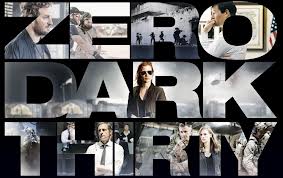
The first assumes that the absence of argument against the use of torture is equal to condoning it. This however does not leave room for the possibility that the absence of argument might just be the absence of argument. I have doubts that there were many CIA operatives during this time (or ever for that matter) that went around moralizing to their superiors. That’s something typically left up to politicians who have much less at stake than the agents and analysts in the field. But let’s forget realism or lack thereof and let’s stick to the writing and filmmaking here employed by Boal and Bigelow.
There is nothing in this film that suggests that either Maya or Dan take the torture that they participate in for granted. In fact, the opposite is true. Maya never looks comfortable in the room and Dan would rather put up with the politics of Washington than remain where he is. They are both acutely aware that they see too much, do too much, and this understanding is central to the film. Maya’s entire arc is built upon the notion that she will lose herself in the process of finding Bin Laden. That is her journey. And there are stakes. Bombs go off in different parts of the world, people die, because Maya and Dan are failing at their jobs. That sentiment is palpable on every one of the characters.
I for one am glad that Bigelow and Boal did not give in to any instinct to moralize or to make the issues surrounding the torture program black and white. I’m glad that they didn’t tell me what to think and allowed for the shades of grey to exist. I believe that the people who are offended by this film are more uncomfortable by the grayness of it all than by the torture itself and in allowing us to come face to face with that, Bigelow and Boal knock it out of the ballpark.
The second argument is that torture was a major contributing factor in finding Osama Bin Laden and that somehow this is factually incorrect. This is also dishonest. First, because it assumes that we have been living under a rock for the last decade. That somehow we have not lived through the collective trauma of Abu Ghraib, Guantanamo, extraordinary rendition, and Rumsfeld. The folks perpetuating this argument mean for us to believe that at no point in the last decade no agent asked a detainee or victim of torture any questions regarding the whereabouts of Bin Laden, and that none of those questions (that never happened) ever resulted in any actionable intel. Call me a cynic, but I don’t buy it. Worse still, the folks who are making this argument also want us to believe that the film happens in a vacuum where there is no time. In fact, many years pass between the moment when Maya hears about the courier and the moment when the intelligence is acted upon. Throughout that time the lead was dropped completely and later revived. More importantly, the case the film actually makes is that only a few people believed that this was a lead at all and that Maya had to build a case and convince others in painstakingly detailed ways.
“Bin Laden wasn’t defeated by superheroes zooming down from the sky; he was defeated by ordinary Americans who fought bravely even as they sometimes crossed moral lines, who labored greatly and intently, who gave all of themselves in both victory and defeat, in life and in death, for the defense of this nation.” Kathryn Bigelow – LA Times 1/15/13
On the other side of the coin, defenders of the film have said that “hey, it’s just a movie” so everyone should relax. But I refuse to see things this simply. It is just a movie, sure. Its purpose is to entertain not educate, sure. But that doesn’t mean that a film cannot do both. This is in essence what I find the most surprising about the arguments surrounding Zero Dark Thirty — I found the film to be more interesting than it was dramatic.
There is a misconception about how movies communicate, particularly movies grounded in fact or research. Filmmakers do not have unlimited words with which to work. We must make our case as efficiently as possible and get you out of the theater before you walk out. The only way to do that is to strike at the essence of subject rather than the facts of subject. Think of your favorite biopics. If you leave those films understanding the type of man/woman the subject is, then you have been educated and informed regardless of how the facts have been fudged with to create drama and entertain. Raging Bull, Amadeus, Lawrence of Arabia etc. all come to mind. This is the lesson of Citizen Kane. What is at the heart of the subject? Rosebud. If you write that, then you achieve the truth regardless of the facts. It is called fiction after all.
The discussion surrounding Zero Dark Thirty ignores everything that happens outside the torture chambers. The great wealth of characters it took to find Bin Laden. The determination and sacrifice involved. In fact, the film is most effective when it mires itself down in the details of the investigation. When we see the spycraft and all of a sudden we are confronted by just how impossible the task of finding Bin Laden is. There are two needle in a haystack sequences in particular that are filled with dramatic tension and are both deeply entertaining and informative. They have characters trying to find one person in a population of millions and informants tracking a single car through a winding city. These moments are as crucial to the finding of Osama Bin Laden as the torture is. The mission required a lot of different forms of intelligence gathering and many individuals. That is the essence of the mission and the truth we are supposed to walk away with. So it surprises me that people were simply not watching the same movie that I was.
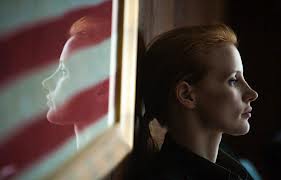
And it is not a perfect movie by any means. It is not the best picture of the year and I do not believe that Bigelow’s snub from the Oscars is all that controversial or undeserved. The film fails miserably at allowing us to feel anything. We are never given a moment in which to latch onto Maya or come to some understanding of what she has lost or gained in the process of this hunt. She says “A lot of my friends have died trying to do this. I believe I was spared so I could finish the job.” But we are never allowed to feel this with her or to experience her loss, how it pushes her, or why it matters. Her closest relationships are leaped into without development. It makes the movie feel distant, detached, and cold. There is nothing true about how these characters act towards each other and that is what I find unbelievable. Of course we cannot have it all. The task these filmmakers undertook was monumental. This is a huge story with a lot of terrain to cover and character was sacrificed in order to offer us as complete a picture as possible in two and a half hours. But it’s success in doing so hinges on what you consider complete.
Bear 71 is an award winning interactive web documentary (that’s a mouthful) that incorporates various media formats in its pursuit to tell a story in an innovative way. It is the story of a Grizzly Bear tagged as number 71 in BANFF National Park. The story is told from 71’s perspective as it contemplates the meaning of the tag, the surveillance she must be subjected to, and the intrusion of humanity into the daily habits of this one particular bear. It is quite beautifully written and even humorous at times, though always subtly so.

On the interactive side, the viewer spends most of their time traveling through the virtual park while listening to 71’s narration. You can link through to surveillance footage of other animals tagged in the park or scenic locations. These connections are full of interesting and educational tidbits that keep you entertained while you listen to the story. A part of why the dynamic presented here is successful is the idea that animals are surveilled. That we are inherently interested in knowing the secrets nature holds and perhaps we can capture them on camera. Most of the footage here is innocuous, animals roaming the wild, as they do, but the storytellers present a compelling case for being curious enough to click through.
I am not a nature lover… I wouldn’t be caught dead camping unless there was a fabulous air conditioned log cabin for me to sleep, bathe, and eat in. However, this site has beautiful design and the storytelling is compelling … so I stayed. It also points towards a very different and perhaps even practical future for digital storytelling. The educational potential here is pretty exciting.
 Sometimes a Good Notion