D&D : Disney & Dali
Walt Disney (and animation in general) tends to get passed over in most History of Film classes. When I was assigned to teach the subject I made a Norquist style pledge not to do this in my class. My discussion of Disney started small, a mere showing of Steamboat Willie during a lecture of sound seemed appropriate. But as I learn more about the artist his prominence in my class has grown and he’s now comfortably discussed as a part of a series of lectures that cover German Expressionism, Neo-Realism, Sound, and Surrealism.
Disney was a versatile artist who borrowed and played in a way that few artists did at the time.
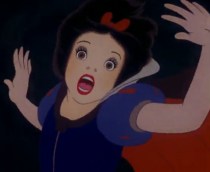 What I admire most about him was that he found ways to incorporate strange and wonderful influences into his work and still managed to tell stories that had wide appeal. From the image and brand that he built around his name it would not seem that he had an extravagant bone in his body, but when I play sequences like Snow White’s run through the forrest, the Queen’s transformation in the same movie, or Dumbo’s pink elephant dream I can’t help but to be amazed at how he used the work of filmmakers like Murnau, Lang, Lewis, Brunuel, and Dali to structure his sequences.

His early films have darkness and violence hidden beneath the glossy surface. Snow White’s Run through the forrest is closer to an early horror film than a children’s fantasy. By using techniques not associated with children’s entertainment, Disney was able to create dynamic contrast that made the stories interesting and sometimes frightening.
Throughout the first twenty years of his career, when he arguably did his best work (Fantasia, Snow White, Pinochio, Dumbo), he would sprinkle his films with mainly european concepts of storytelling such as dream logic, theatricality, high contrast, and stylization to symbolize a character’s emotional state. Disney’s acceptance of modern artistic concepts would put him on a collision course with Salvador Dali who he would meet and form an unlikely partnership with in the 1940’s.

One could not think of two artists so diametrically different from each other. Disney with his squeaky clean American image, and Dali with his confrontational eccentricity. Yet these men also shared the common goal of creating beauty in a world that kept tearing itself apart. The two unlikely partners decided to collaborate on a short animated musical piece which told the story of Chronos, the god of time, and his tragic love for a mortal dancer. The piece would be called Destino.
The collaboration would span a few years but would ultimately fall appart due to contractual and financial differences. However, the break up left in its wake over 200 original sketches, 13 paintings, and storyboards all by Dali which would remain in the Disney vaults for over 40 years. A holy grail if there ever was one.
I would not be until 1999 that Roy Disney would begin to finish the film. With the help of the Disney Studios in Paris and Director Dominique Monfrey, Roy Disney set to the task of completing this short piece of animation history.
The story of these two men would continue to fascinate writers and bloggers for years and details about this partnership have continued to trickle out. Letters between these two artists have been released to the public revealing a far deeper friendship than previously thought and deepening the mystery of this collaboration. For me, the most interesting tid bit of information is one particular detail of their contractual obligation to each other. Disney and Dali agreed that Disney could hold the paintings but would not own them until the film was completed. It is as if they knew that their styles and the practicalities of filmmaking would eventually stop them short of completion, but they made it impossible for future generations of money men at Disney to leave the work unfinished.

 Sometimes a Good Notion