Sometimes a Good Notion

Archive for the month “November, 2011”

On Tough Criticism

This has been on my mind for a few days and I’ve been unsure on how to approach the subject, but I decided what the hell… A large part of what I do is to provide students with the opportunity to have their work critiqued not only by me but also by their peers. For the most part students take a non-combative approach to criticism leaving the often-difficult work of dismantling a piece to me, which is understandable. On a few occasions I have had students that have reacted defensively to what have been tough critiques of their work and this got me reading up on the art of critiquing.  During that process I found two perspectives that I tend to agree with.

The first is from an essay written by Jeffrey Di Leo in The Chronicle of Higher Education entitled In Praise of Tough Criticism.  Di Leo writes the following:

But when it comes to criticism, is compassion really preferable to combativeness? Does an upbeat style actually encourage positive tendencies in the profession? Is compassion an intellectual virtue? The answer to those questions is no. If a compassionate, caring form of criticism entails removing the “critical” from “critical exchange,” then I would rather see the field move toward a more combative, confrontational style—even if it means ruffling a few feathers.

I agree with the assessment.  On most occasions I only get one semester to make an impact in my student’s work. It might seem like an eternity to the student but it really isn’t that much time.  It is my job to move the student past conformity. I do not approach that, I don’t think, by trying to convince the student that I’m right but rather by trying to convince them that there are approaches to their story other than their own. I hope I help them understand that as writers and filmmakers they are required to think more and settle less.  Sometimes this is an impossible task and it can get rough which is when the second perspective I found on the subject comes into play.

It comes from a blog called Your Screenplay Sucks (one of my favorite reads on the internet). Screenwriter and critic Bill Akers argues that as writers we need to learn to Accept the Body Blow.  He argues

Know it’s normal, however, to WANT to stand up and shout that they don’t understand the genius you have laid upon the world… just don’t do it. Resist the temptation to raise your hackles. Breathe deep and imagine they are NOT swinging a great Conan-size bloody battle-axe at your head… take notes and become a better writer.

The purpose of critique is to create positive tendencies. My goal is for the student to leave the classroom after one term and be able to identify their mistakes on their own. It is not, as some students believe, to demonstrate how much greater a writer I am.  In fact I tend to end each term by giving my students a copy of whatever it is I am writing at the moment so that they can critique me. This is for the most part a lopsided event because I still havent given them their final grade, but it allows them to see that no one gets it perfect right-off-the-bat and that as artists they have to be willing to accept that.

Catch of the Day: Fresh Air Francis Ford Coppola

I was fortunate enough to catch this bit last night on my drive home from the Airport.   Coppola had his latest film premiere @ Toronto and did a question and answer session. It’s mostly memories and tales from old productions but it makes for good listening.

http://www.npr.org/v2/?i=140870590&m=142506207&t=audio

They also make reference to a moment at the end of Apocalypse Now and the development of one of the finest film monologues ever written.

                                        KURTZ
                         I've seem horrors.  Horrors that
                         you've seen.  But you have no right
                         to call me a murderer.  You have a
                         right to kill me.  You have a right
                         to do that.  But you have no right
                         to judge me.

                         It's impossible for words to
                         describe what is necessary to those
                         who do not know what horror means.
                         Horror.  Horror has a face.  And
                         you must make a friend of horror.
                         Horror and moral terror are your
                         friends.  If they are not, then
                         they are enemies to be feared.
                         They are truly enemies.

                         I remember when I was with Special
                         Forces.  Seems a thousand centuries
                         ago.  We went into a camp to
                         inoculate some children.  We'd
                         left the camp after we had
                         inoculated the children for polio.
                         And this old man came running after
                         us, and he was crying.  He couldn't
                         say.  We went back there, and they
                         had come and hacked off every
                         inoculated arm.  There they were,
                         in a pile.  A pile of little arms.
                         And, I remember, I cried, I wept
                         like some grandmother.  I wanted
                         to tear my teeth out.  I didn't
                         know what I wanted to do.  And I
                         want to remember it.  I never want
                         to forget it.  I never want to
                         forget it.  And then I realized,
                         like I was shot, like I was shot
                         with a diamond bullet through my
                         forehead.  And I thought, My God,
                         the genius of that!  The genius.
                         The will to do that.  Perfect,
                         genuine, complete, crystalline,
                         pure.  And then I realized, they
                         were stronger than we.  Because
                         they could stand it.  These were
                         not monsters.  These were men,
                         strained cadres.  These men who
                         fought with their hearts, who have
                         families, who have children, who
                         are filled with love...that they
                         had the strength, the strength to
                         do that.  If I had ten divisions
                         of those men, then our troubles
                         here would be over very quickly.
                         You have to have men who are moral,
                         and at the same time, who are able
                         to utilize their primordial
                         instincts to kill without feeling,
                         without passion.  Without judgment.
                         Without Judgment.  Because it's
                         judgment  that defeats us.

                         I worry that my son might not
                         understand what I've tried to be.
                         And if I were to be killed, Willard,
                         I would want someone to go to my
                         home and tell my son everything...

                         Everything I did.  Everything you
                         saw.  Because there's nothing I
                         detest more than the stench of
                         lies.  And if you understand me,
                         Willard, you will do this for me.

Giving Thanks all Weekend Long

Battery Park, NY

XSi 1/100 5.6

Favorite Films: Breaking The Waves

As a Cinema professor  one of the first questions that I often get asked by my students is ‘what’s your favorite film?’  As a film lover I find the question frustratingly difficult to answer.  How does one begin to narrow down the choices when they include every film ever made?  Granted my students only ask me after I’ve put them through the same torture, so I guess it’s only fair. My stock answers are Casablanca and Dancer in the Dark, those typically throw them off.  But the real answer is far more complicated and can’t be answered with one or two titles.  My favorite films are many and they can’t be ordered based on any criteria. I hold them in high regard for many different reasons. The first of these films is Breaking The Waves, directed by Lars Von Trier and released in 1996.

The first thing I remember about Breaking the Waves was the experience of seeing it. A friend of mine dragged me to this rinky-dink art-house theater in Georgetown, D.C.  It was the type of place that you had to go down dark steps and alleyways to get to and the thrill of surviving the excursion without getting mugged was part of the fun.  I remember having two different reactions to the film once it was over. The first was that I felt nauseous.  I had never seen anything shot entirely with a hand-held camera and the movement made me dizzy. The second was anger. I was angry at the movie, at Von Trier, at my friend for taking me to see it, at Emily Watson who plays the main character of Bess.  I was angry.

I probably dismissed it as pornography or trash or something easy without giving it much thought when I discussed it with my friend. But as I was going to bed that night (at 19 years old and meandering through my first year of college), I remember thinking to myself that I had never seen a movie that I felt so strongly about or that evoked such a strong reaction from me. I didn’t know about Dogma, or The Good Woman Trilogy, or anything about Von Trier. All I knew was that Breaking The Waves was different and that made it seem important. It made me want to learn about it and how the film provoked me. I had gone to college to be a journalist for no particular reason, it just seemed like a good choice. That night however, there was a seismic shift somewhere in my brain and my direction changed. The next semester I registered for my first film class and my story goes on from there.

I revisited Breaking The Waves last night. It’s the third time I’ve seen it including that night in 1996. It no longer makes me nauseous, I now take hand-held for granted, but it still makes me angry.

Breaking The Waves takes place in a small coastal town in Scotland.  It involves Bess (masterfully played by Emily Watson), a simple-minded woman who marries a much more experienced oilrig worker named Jan.  When Jan is paralyzed in a rig accident he coaxes Bess to sleep with other men and then tell him about it.  He convinces her that if he forgets what love is like he would die. She does what he asks.

The story uses religion and faith as motivators for Bess’ actions. Bess not only believes in God and talks to him, but he talks back. Literally. Bess closes her eyes and speaks the words of god, to this day I’m surprised that this contrivance passes muster.  God tells her to be good and demands that she prove to him how much she loves Jan.  Her faith runs so deep that she convinces herself that if she sleeps with these men Jan might be saved. The story quickly sinks into tragedy and despair as Bess’ misguided faith leads her to take more desperate and dangerous action to “save” Jan.

Von Trier would have us believe that this is the story of a saint. That she’s a woman so good that she would sacrifice everything for love. But he confuses things by making Bess dim-witted with a history of mental and emotional illness. Von Trier is constantly begging the question is she a martyr or a victim? Can one be both? If Bess had a normal capacity to reason, would she make the same choices?  Perhaps it’s me. I might be too bound by reason to blur the lines between choice and abuse so easily and believe it to be god’s work.

Breaking the Waves remains for me as frustrating to watch as it was the first time. Now I just understand that Von Trier is not interested in providing answers, he just wants to provoke you with questions and situations so vile that they make you want to look away, but you can’t.  Not even his mystical conclusion can appease the way you feel about Bess.  His resolution doesn’t undo that throughout his narrative, words like woman, fool, martyr, and victim all become synonymous. It’s quite a challenging pill to swallow but that’s also what makes it riveting to watch and it’s certainly what  made it so damn unforgettable for me.

10 Seconds @ Grand Central

I saw this picture a few days ago as I was looking for information on how to merge pictures using GIMP. It was taken by Nathan2009 over at Flikr. I’m assuming it’s continuous photos over a period of 10 seconds. I’m not exactly sure how the photographer went about creating the effect. I’m assuming that he used a mask between layers and then exposed the parts he thought were interesting or perhaps he exposed the whole image. I also wonder if he did some additional blurring in post. However he did it I’m in love.

He captured an extended period (as in longer than a second) of time in one single frame and it tells a story. You can tell who’s waiting and who’s running. Who can stand still for ten seconds while having a conversation, waiting on a line, or even taking a picture. It’s so full of the ordinary juxtaposed with this grand space where it takes place which remains still and constant as it has for over a hundred years.

I’m determined to learn how to do this so I’m going to take my camera up to NY this weekend and try some things out. Perhaps I’ll try from the staircase outside the MET or from the top of the spire at the Guggenheim. Both of those spaces always have a lot of movement.  I’m excited!

Brunch at Le Boudoir

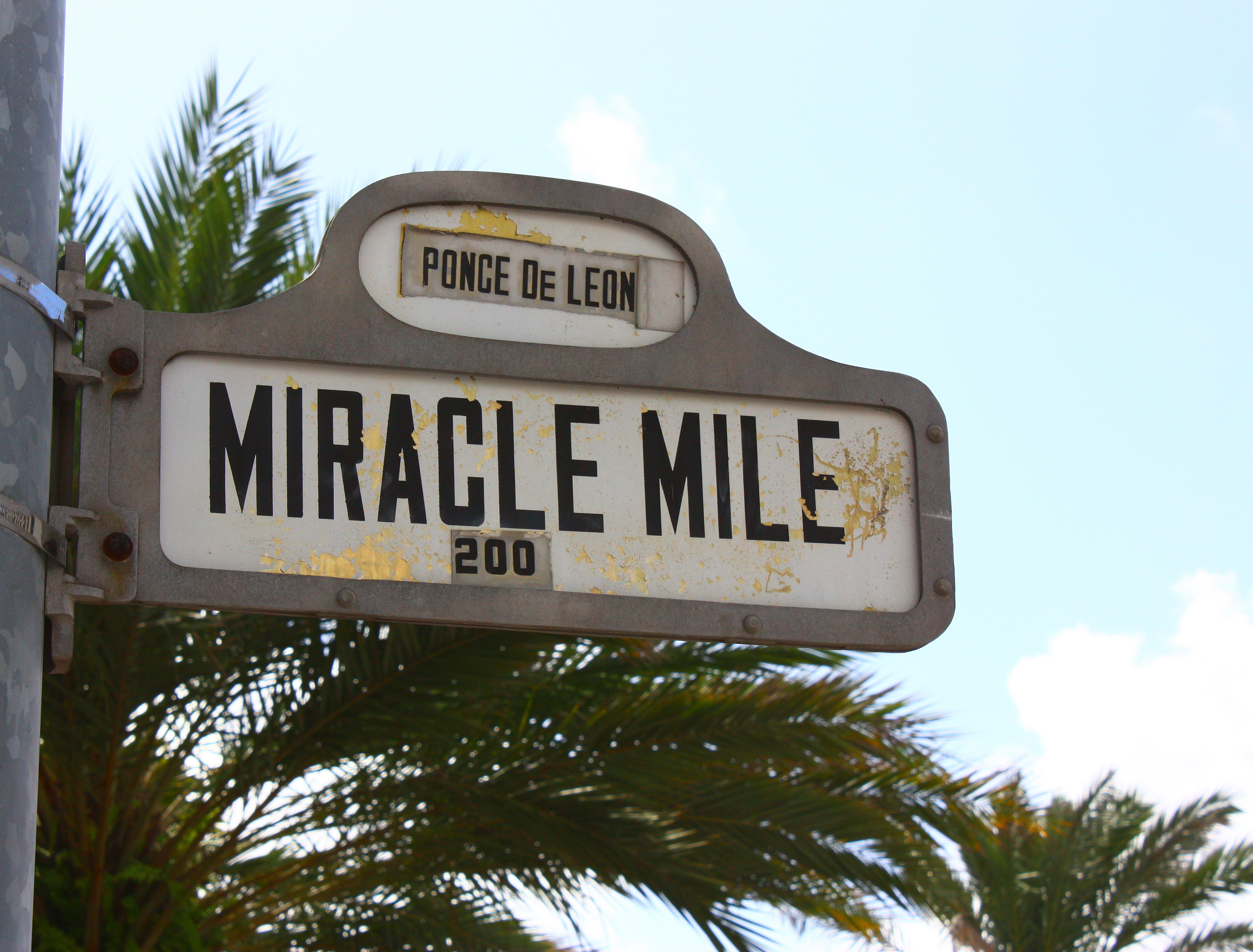
One of my favorite places in Miami is a tiny French Bistro called Le Boudoir which has an terrific brunch menu.  The Miracle Mile location which is on the corner of Ponce de Leon and Coral Way  is perfectly located in the heart of a fairly quaint shopping district. It has an outdoor, covered seating area which is refreshing during the Fall and Spring and it’s perfect for people watching in a city where you’re mainly stuck in a car and in air conditioning.  The interior is tackily decorated in pink cushioned seats and booths which attracts my kind of patron among others including families coming from church, tourists (The Biltmore is nearby), and UM students. It’s eclectic to say the least and modern, but it has never struck me as pretentious.

They don’t serve anything you wouldn’t expect from a French Bistro at Brunch time.  Petit Dejuner includes croissants and croques of all genders and specialties range from quiches to eggs benny (the best I’ve had so far in Miami, though I’m open to suggestions.) People rave about the Macaroons, but I’ve never had the appetite for them. One of these days I’ll drop by. The pricing seems fair and although the menu clearly says the gratuity is not included, it has always been included (maybe it’s me!), and they are generous to themselves even when the service is mediocre.

I can overlook whatever flaws Le Boudoir has because of its location. Miracle Mile is a terrific little strip of Coral Way, perfect for window shopping and ‘caféing’ (yes, it’s a verb now). It’s one of the few locations in Miami that can still have two Starbucks across the street from each other and have those both survive. As an added plus, it’s a few blocks away from Books & Books which will kick B&N a** any day of the week.

I Heart Miami

In Coral Gables, Banyan trees line the streets

XSi 1/200 5.6

The Iron Lady & W.E.

As if last year’s best picture upset wasn’t enough the Weinstein’s are back teaching us all how a film campaign is actually run.

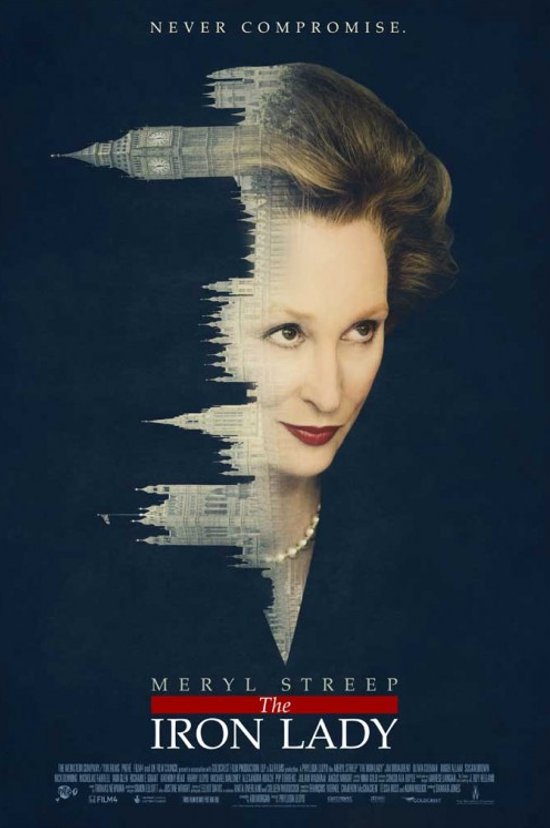
First , with the fantastic trailer for The Iron Lady the race for best actress  is officially on and Viola Davis has some tough competition.

And yesterday W.E., which was ravaged by critics in Venice, got the Weinstein touch.  They present a luscious trailer that makes you wonder if all the negative hype was actually accurate.

This will be an interesting campaign to follow as TWC seems to have embraced offering W.E. as a bit of stylish pop culture befitting it’s director rather than as a grand cinematic opus.  The stills they’re offering up are absolutely stunning and are being provided in more stylish venues like W Magazine, Harper’s Bazaar, Vanity Fair and the Little Black Gallery in London. By focusing on the image rather than its star TWC could have a strong contender in Costumes, Production Design, and Cinematography. The artists behind these categories are Cinematographer Hagen Bogdanski (The YoungVictoria),Costume Designer Arianne Phillips (The Crow, A Single Man), Production Designer Martin Childs (Shakespeare in Love). Both Phillips and Childs have received previous nominations in Weinstein handled films.

Production Forms

Here is a general collection of production forms by category. They can be used as is or you can create your own using this format.

MDC Formatted Forms

MDC Call Sheet

MDC Cast Contact List

MDC Cast Scene Number Breakdown

MDC Crew Contact Sheet Long

MDC Crew Contact Sheet Short

MDC Production Requirement Checklist

MDC Script Breakdown

MDC Script Supervisor Continuity Log

MDC Script Supervisor Wrap Report

MDC Shot List

SAG Paperwork

Sag Folder


Limelight

Terry:  I thought you hated the theater? 

Calvero: I also hate the sight of blood, but it’s in my veins. 

In Limelight Charlie Chaplin plays Calvero, a retired vaudevillian clown who fell from fame and fortune but who desperately wants to be back on top. He can’t help it, it’s in his veins. Limelight is melodramatic and preachy, full of life lessons we wouldn’t tolerate in movies today, and it’s indeed a masterpiece; one of Chaplin’s finest films and his most nuanced performance.

The story is simple.  Calvero, a clown and a drunk, stumbles into his building one day and smells a gas leak just as he’s about to light his cigar. He breaks down the door to the apartment where the leak is coming from and finds Terry, a suicidal prima-ballerina, lying unconscious on the bed. Calvero saves her life despite his drunkenness and over the months that follow Calvero discovers that Terry is, simply put, insane.  She is so afraid to live that she has convinced herself to have series of crippling diseases that prevent her from going on, literally. She has psychosomatically convinced herself that she is paralyzed and can never dance again.  Calvero will have none of it, first with inspirational speechifying and later with fierce physical brutality he commands her to live. It is this relationship which is the impetus for Terry’s recuperation and triumphant return to the stage.  Through flashbacks and their interactions we discover that Calvero was a successful clown and an alcoholic who believed the only way to be funny was to be drunk.  His fast life led to a heart attack and rejection from his once adoring audience.  He too must recover and find the courage to be great once more.

From the first few minutes of the film we know we are in strange territory.  Limelight is a talkie, Charlie Chaplin speaks. If you have never heard him speak, he has a gentle accent and overall pleasant voice. 

From: The Great Dictator. The Tramp Speaks!

The film is also dramatic. It deals with suicide, death, and failure. Long gone are the days of the Tramp. Chaplin however uses similar techniques as in his earlier successes to create the comedy in Limelight.  Chaplin’s Tramp was about contrast.  He was a bum who was also elegant and refined. He’ll eat his boot but he’ll do it with class. It was this game between the reality of poverty and the uselessness of manners that allowed Chaplin to offer his most poignant critiques and create brilliant comedic moments.   In Limelight the contrasts are between Clown and Ballerina.  Terry, played by the gorgeous Clair Bloom, is young and delicate.  Calvero is the polar opposite (Chaplin was 63 when the film was made). It goes beyond age and looks though, her disposition as someone who is so willing to give everything up despite her opportunities makes Calvero’s desperation to cling onto life all the more meaningful, funny, and touching.

Limelight is not without its flaws. Bloom stage acts throughout the film offering no subtlety. The script is over written leaving nothing unsaid. And the scenario is melodramatic making the combination deadly by today’s standards. What keeps it from collapsing is Chaplin who gives a quiet, nuanced, and personal performance.  It might be clichéd to say, but when Chaplin is silent he is his most powerful. There is a moment in the film, right after he’s given a terrible performance and the crowd has walked out on him, when he looks in the mirror and you know he realizes that there’s no getting back from this.  It’s quiet, reserved, underplayed and terrific storytelling.

This film must also be informed by its history as there is much beyond the text. Limelight was shot in 1952. By that time Chaplin had undergone a series of scandals that had made his relationship with audiences difficult.  His social leanings, exacerbated by the speech in The Great Dictator (featured above), also drew the attention of J. Edgar Hoover and Joseph McCarthy.  According to many not only was Chaplin a pervert who slept with women half his age and fathered bastard children, he was also a communist.  By 1952 the most famous’ man in the world had fallen from grace, the audience had left him, and on September 19, 1952 as Chaplin traveled to England, the US Attorney General revoked Chaplin’s permit to re-enter the United States where he had lived since 1914. He was an outcast, banished,  much like Calvero’s failed clown, a comparison that is both apt and obvious.

The tragedy of it all is that despite this being Chaplin’s least political film it was banned in the United States and lost for two decades.  It was released in 1972 and Chaplin won his only competitive Oscar for the score.  He would return to the United States in 1973 to accept the AMPAS Lifetime Achievement Award.


Post Navigation